
NFPA 72 code sections · Regulatory Compliance & Inspections
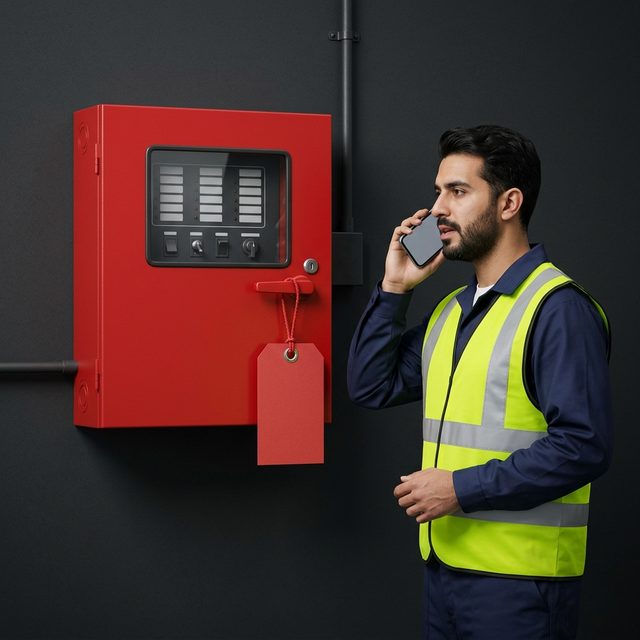
Impaired system? Notify, mitigate, tag, and fix on a clock
When any part of a fire alarm system is out of service — planned or unplanned — the owner's impairment procedures apply: the supervising station, the AHJ and the building's designated personnel are notified; mitigating measures such as fire watch are put in place as the AHJ or building code requires; a tag is placed at the control unit; and when the impairment is cleared everyone is notified again. Central station rules add that the station reports systems out of service for 8 hours or more to the AHJ. The compliance failure inspectors see most is a system that has been 'in trouble' for weeks with no one notified.
NFPA 72 reference
Chapter 10 — Fundamentals / Chapter 26
10.21 Impairments (10.21.1 notification of the AHJ and supervising station; 10.21.2 mitigation and fire watch; 10.21.3 impairment tag at the control unit; 10.21.4 restoration notification); 26.3.8 central station reporting of out-of-service systems (8 hours)
References use NFPA 72 2019/2022 numbering — section numbers can shift between editions, so confirm in the edition your AHJ has adopted.
On the job
A grocery store's NAC extender fails on a Friday. The manager silences the trouble and plans to call Monday. Saturday the fire marshal, doing a routine walk-through, sees the yellow light and asks for the impairment tag and the fire-watch log. There are none. The store gets a notice of violation and a fire-watch requirement until the repair is made.
Quick check
1. When a system is impaired, the first step is to:
2. An impaired system must carry:
3. Fire watch is:
Listen to this section
AI-narrated, about a minute.
Ask about this section
Get a plain-language explanation of what this rule requires and what to check on the job.
3 free explanations left on this device.