
NFPA 72 code sections · Circuit Faults: Finding Grounds, Shorts and Opens
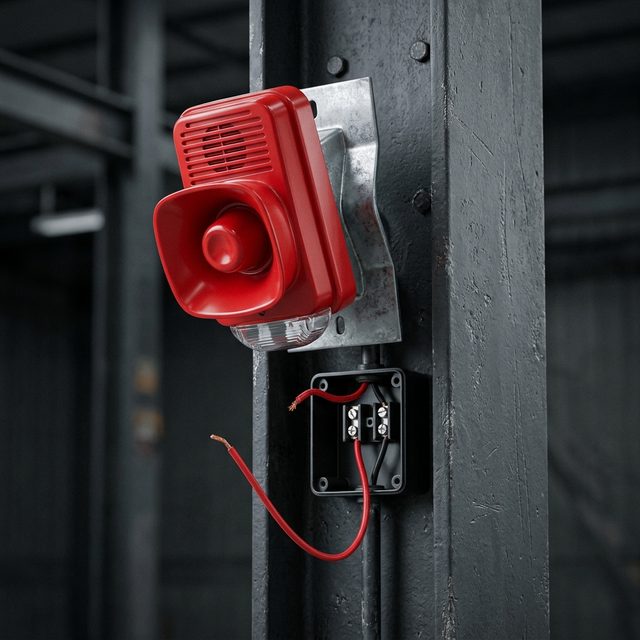
Open circuit: a break in the wire
An open is a break anywhere in the circuit — a loose terminal, a broken conductor, a device pulled off its base, a missing or failed end-of-line resistor. Because every monitored circuit is supervised, the panel notices that the small supervisory current stopped flowing and shows a TROUBLE for that specific circuit: 'Open', 'IDC 3 Trouble', 'NAC 2 Open' or, on an SLC, the addresses beyond the break stop reporting and are listed as missing. On a Class B circuit everything past the break is out of service even though the panel still 'sees' the beginning of the run — that is the whole reason Class A and Class X pathways exist. NFPA 72 requires the trouble indication for an open within 200 seconds, and the devices past a single open on a Class A pathway must keep working.
Common causes on the job
- A terminal screw backed off or a conductor landed on the insulation instead of copper
- A detector head removed for painting, cleaning or a remodel and never put back
- The end-of-line resistor missing — moved to the panel 'temporarily' or left out when a device was replaced
- A broken conductor at a staple, a sharp bend or inside a wire nut that was twisted too many times
- Corroded terminals in a damp or exterior location
- On an SLC, a failed device or isolator module opening the loop, or an address removed from service
How to find it, step by step
- Read the panel: which circuit, since when, and for an SLC which addresses are missing. The first missing address tells you roughly where the break is.
- Walk the circuit for the obvious: missing heads, devices hanging, fresh paint, ceiling work, new tenants. Most opens are found with your eyes.
- At the panel, lift the circuit and meter it: an open Class B circuit reads OL (infinite) instead of the EOL value. If it reads OL, the break is anywhere between the panel and the EOL.
- Verify the end-of-line first: open the last device and confirm the resistor is present and reads correctly. A missing EOL looks exactly like an open — and defeats supervision of the whole run.
- Split the circuit at the midpoint device: lift the outgoing pair and jumper a resistor of the EOL value across the panel-side pair. If the panel's trouble clears, the open is downstream; if not, upstream.
- Keep halving until the open is between two devices. Check each terminal for copper under the screw, tug-test the conductors and look at the cable path for staples or new fasteners.
- Repair, remove any temporary jumper, restore the EOL at the last device, reset, confirm the panel reads normal, test the devices on the run, and record the repair.
NFPA 72 reference
Chapter 12 — Circuits and Pathways
12.6.1 single open on installation conductors shall result in a trouble signal; 12.6.2 trouble indicated within 200 s; 12.3.1 Class A and 12.3.6 Class X pathways keep operating past a single open
References use NFPA 72 2019/2022 numbering — section numbers can shift between editions, so confirm in the edition your AHJ has adopted.
On the job, step by step
- A warehouse panel shows 'NAC 2 TROUBLE — OPEN' Tuesday morning. The night crew says the horns in the east bay didn't sound during a drill last week — they thought it was normal.
- Lena pulls the trouble history: it started Saturday, when a racking contractor was on site.
- She walks NAC 2. The first two horn/strobes look fine. The third, on a column at the end of aisle 7, is hanging by its wires — the mounting plate is bent where a forklift mast caught it.
- At the panel she lifts NAC 2 and meters it: OL. She goes to the hanging appliance and finds one conductor pulled clean out of its terminal.
- Before fixing it, she checks the end of the line: the last strobe still has its EOL resistor, reading the correct value, so the only break is the pulled conductor.
- She replaces the bent plate, re-lands the conductor under the screw with copper showing, and adds a wire guard since the column is in a forklift lane.
- NAC 2 reads the EOL value at the panel; the trouble clears. She activates the NAC and confirms every appliance in the east bay sounds and flashes, then records the repair and the new guard.
Quick check
1. On a Class B circuit with an open halfway along the run:
2. A missing end-of-line resistor looks to the panel like:
3. The first thing to do when an SLC lists several addresses as missing:
Listen to this section
AI-narrated, about a minute.
Ask about this section
Get a plain-language explanation of what this rule requires and what to check on the job.
3 free explanations left on this device.