
NFPA 72 code sections · Circuit Faults: Finding Grounds, Shorts and Opens
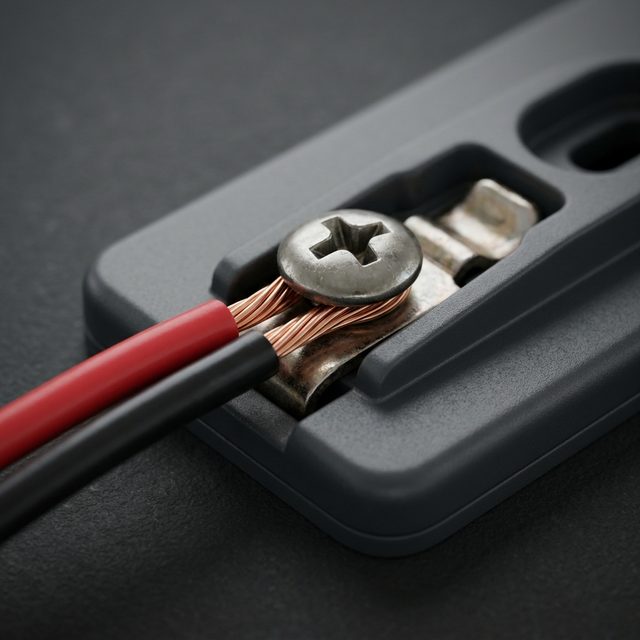
Short circuit: the two conductors touching each other
A short is the positive and negative conductors of a circuit connected with little or no resistance. What the panel shows depends on the circuit type. On a conventional IDC a short looks exactly like a device in alarm — the panel declares an ALARM on that zone, and it will not clear until the short is removed. On a NAC, the panel reads a short as a TROUBLE and holds the circuit off so the output driver is not damaged; appliances on that circuit will not operate until it's fixed. On an SLC, a short pulls the loop voltage down: devices between the panel (or the nearest isolator) and the fault drop off, and the panel reports a loop trouble or 'communication failure' for them. NFPA 72 is specific that a single open or short on an IDC, SLC or NAC must not cause the loss of more than one zone or the protected area the designer allowed for the pathway class.
Common causes on the job
- A pinched cable where a cover, mounting plate or device base clamps both conductors together
- Wire nuts on a splice with a stray strand, or a stripped length long enough to bridge the terminals
- A damaged horn/strobe or detector base with an internal short
- Conductors crushed by a staple or crossed on a terminal block when someone re-landed wires
- A conventional detector in alarm (not a short at all — rule this out first)
- On an SLC, a failed device, or a wrong-polarity device shorting the loop
How to find it, step by step
- Read the panel and name the circuit: which zone or NAC, alarm or trouble, and since when. On a conventional zone, walk it first and look for a detector LED latched on — that's a device in alarm, not a short.
- Reset and watch: if an IDC alarm returns instantly with no device LED lit, it's a short. If a NAC trouble returns the moment you reset, same thing.
- At the panel, lift the circuit and meter it: a short reads near 0 Ω across the pair (a healthy Class B IDC reads the end-of-line value, a NAC reads the EOL plus appliance polarity diodes blocking).
- Split the circuit at a device near the middle: lift the outgoing pair and read the two halves. The half that still reads near zero contains the short.
- Keep halving until you are between two devices or inside one box. Open the device: look for pinched jacket, stray strands, crossed terminals or a burnt appliance.
- Repair: re-strip to the right length, replace the damaged device or cable section, keep the conductors separated and dressed away from the mounting plate.
- Reconnect at the panel, reset, confirm the EOL reading and normal supervision, then functionally test the zone or NAC and record the repair.
NFPA 72 reference
Chapter 23 — Protected Premises Fire Alarm Systems / Chapter 12 — Circuits and Pathways
23.6.1 a single open or single short on an IDC, SLC or NAC shall not cause loss of more than the zone/area permitted; 12.3 pathway class designations (Class A, B, X); 12.6 monitoring integrity
References use NFPA 72 2019/2022 numbering — section numbers can shift between editions, so confirm in the edition your AHJ has adopted.
On the job, step by step
- Friday afternoon a school calls: Zone 4, second-floor corridor, is in alarm and won't reset. Nobody saw smoke.
- Dev resets the panel; Zone 4 comes right back into alarm. He walks the corridor — no detector LEDs lit, no pull station pulled.
- At the panel he lifts Zone 4 and meters the pair: 0.6 Ω. A dead short somewhere on the circuit.
- He opens the detector base midway down the corridor and lifts the outgoing pair. Panel side: 4.7 kΩ — the healthy EOL value. Field side: 0.6 Ω. Downstream.
- Three devices later he finds a heat detector base someone remounted that morning after painting; the plate squeezed both conductors against a screw head. Insulation is gone on both.
- He cuts back the damaged section, re-terminates with clean strips and dresses the wires behind the plate.
- Reconnected, Zone 4 resets and stays normal. He tests the heat detector with a heat gun, confirms the alarm and reset, and logs the repair with the painter's work order number.
Quick check
1. On a conventional IDC, a short between the two conductors shows at the panel as:
2. On a NAC, the panel treats a short as a trouble and holds the circuit off in order to:
3. Before chasing a 'short' on an IDC that is in alarm you should first:
Listen to this section
AI-narrated, about a minute.
Ask about this section
Get a plain-language explanation of what this rule requires and what to check on the job.
3 free explanations left on this device.