
NFPA 72 code sections · System Testing & Maintenance
Change the system, retest it — and 10% of what you didn't touch
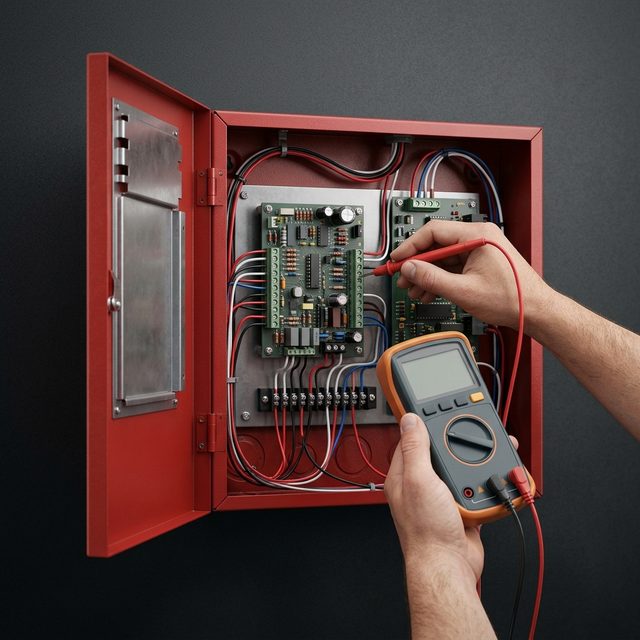
After the initial acceptance test, any change triggers a reacceptance test. When devices are added, deleted or modified, the changed devices are tested 100 percent, plus 10 percent of the existing initiating devices that were not affected — up to a maximum of 50 — to prove the rest of the system still behaves. Changes to the site-specific software require 100 percent testing of every function the change affects, plus the same 10 percent / 50 device sample. Software revision changes to the panel's operating system require a full functional test. The reacceptance results are documented just like the original.
NFPA 72 reference
Chapter 14 — Inspection, Testing, and Maintenance
14.4.2 Reacceptance Testing (14.4.2.1 100% of changed components; 14.4.2.2 10% of unaffected initiating devices, maximum 50; 14.4.2.3 site-specific software changes; 14.4.2.4 operating-system changes — full test)
References use NFPA 72 2019/2022 numbering — section numbers can shift between editions, so confirm in the edition your AHJ has adopted.
On the job
A tenant fit-out adds 12 detectors and relocates 4 strobes in a 300-detector building. The contractor tests the 16 new or moved devices and calls it done. The AHJ requires 10 percent of the untouched initiating devices — 30 detectors, under the 50 cap — to be tested too. Device 211 fails to report: a loop isolator was knocked loose during the fit-out, which the 10 percent sample was designed to find.
Quick check
1. After adding devices, how many of the unaffected initiating devices must also be tested?
2. A change to the panel's site-specific programming requires:
3. In a 300-detector building, the 10% reacceptance sample is:
Listen to this section
AI-narrated, about a minute.
Ask about this section
Get a plain-language explanation of what this rule requires and what to check on the job.
3 free explanations left on this device.