
NFPA 72 code sections · Advanced Topics: Addressable, Wireless & IoT
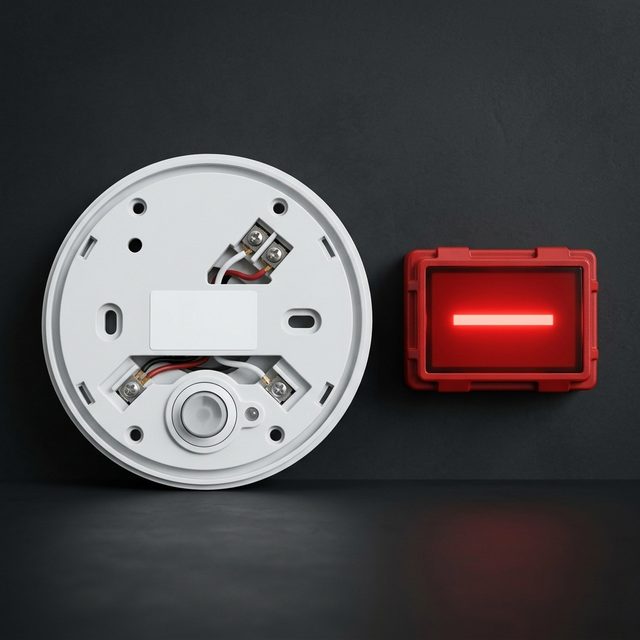
Addressable means every device is identified — at the panel and in the records
The advantage of an addressable system is that the control unit can identify the specific device in alarm, trouble or supervisory — and the code turns that into requirements. Annunciation must identify the device location in a way responders understand; the device address and location are recorded on the as-built drawings and in the panel's point list; a removed or missing device is a trouble by address; and the panel's sensitivity read-out, where listed for the purpose, can be used for the sensitivity test. The record-keeping burden rises with the capability: a 1,000-point system with unlabeled addresses is a worse system than a 20-zone conventional panel with good labels.
NFPA 72 reference
Chapter 10 / Chapter 14 / Chapter 7
10.18.2 annunciation of condition and location (device-level identification on addressable systems); 14.4.4.3.4 sensitivity testing via a listed control unit read-out; 7.4 / 7.5 device addresses on shop and as-built drawings; 23.8.5 device removal indicated by address
References use NFPA 72 2019/2022 numbering — section numbers can shift between editions, so confirm in the edition your AHJ has adopted.
On the job
A 14-story residential tower's panel shows 'SENSOR 3-112 TROUBLE' for a week. Nobody can find device 3-112 because the as-builts show addresses only for the original tenant layout; three remodels later the device is behind a new wall. A full point-list reconciliation walk — every address verified against its location — becomes the owner's reacceptance deliverable for every future remodel.
Quick check
1. Addressable systems must annunciate:
2. A listed panel's sensitivity read-out may be used for:
Listen to this section
AI-narrated, about a minute.
Ask about this section
Get a plain-language explanation of what this rule requires and what to check on the job.
3 free explanations left on this device.