
NFPA 72 code sections · Advanced Topics: Addressable, Wireless & IoT
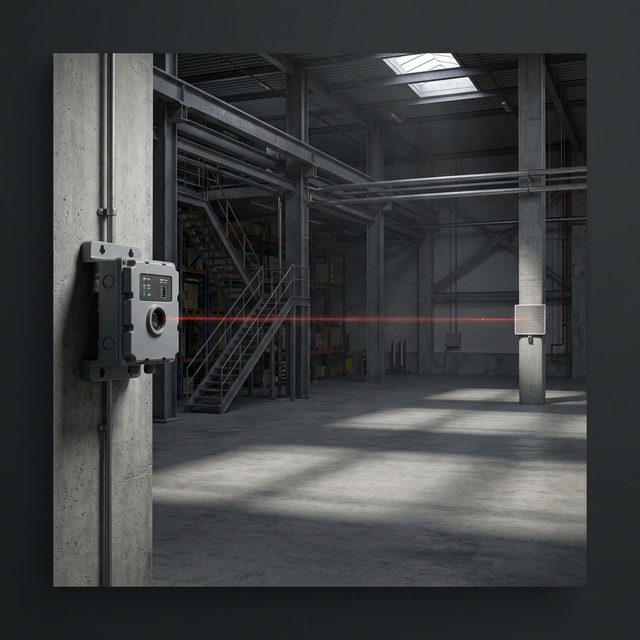
Projected beams: blocked is trouble, obscured is alarm
Projected beam smoke detectors cover large open spaces — gyms, atria, warehouses — with a transmitter and receiver (or a reflector). They are mounted on stable structural surfaces so building movement doesn't misalign them, spaced per the listing (commonly up to 60 feet apart with the beam no more than 30 feet from a wall), and installed so the beam is not obstructed by opaque objects. A rapid, complete blockage of the beam — a banner, a forklift mast — must produce a trouble signal, not an alarm; gradual obscuration from smoke produces the alarm. Lenses are cleaned and alignment verified at the annual test.
NFPA 72 reference
Chapter 17 — Initiating Devices
17.7.3.7 Projected Beam-Type Smoke Detectors (17.7.3.7.1 spacing per listing; 17.7.3.7.2 mounted on stable surfaces; 17.7.3.7.4 beam path free of obstructions; 17.7.3.7.5 complete blockage indicated as trouble); 17.7.1 general requirements
References use NFPA 72 2019/2022 numbering — section numbers can shift between editions, so confirm in the edition your AHJ has adopted.
On the job
A convention center hangs holiday banners that cut through four beam paths. The system reports four troubles — correct behavior — and the facility team learns that beam paths need to be on the event setup drawings. On the same project the beam mounted to a hanging duct went into trouble every time the air handler started; it is remounted on the structural wall.
Quick check
1. A banner that suddenly blocks a projected beam entirely should cause:
2. Beam detector transmitters and receivers are mounted on:
3. Beam spacing is determined by:
Listen to this section
AI-narrated, about a minute.
Ask about this section
Get a plain-language explanation of what this rule requires and what to check on the job.
3 free explanations left on this device.