
NFPA 72 code sections · Fire Alarm Control Panels
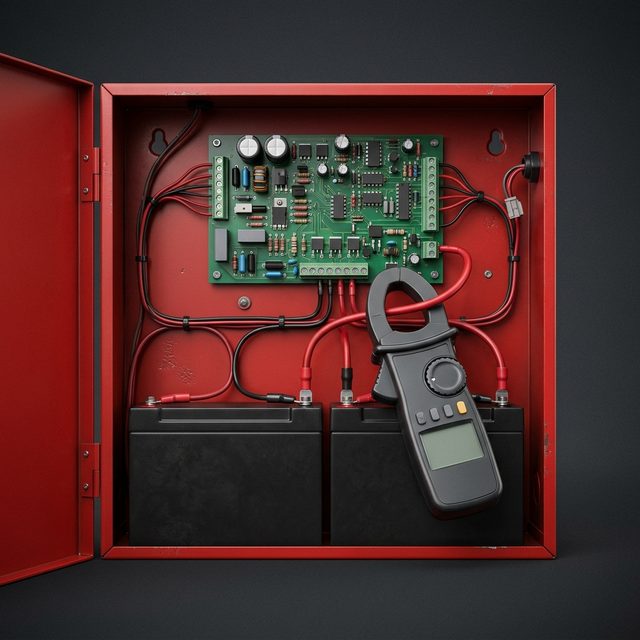
Chargers: 70 percent in 12 hours, full in 48
Secondary batteries have to be kept ready by a charger that can recharge them from the end-of-discharge point to 70 percent of capacity within 12 hours and to full capacity within 48 hours. Batteries are marked with their installation date, the charger is monitored so a charger failure produces a trouble, and batteries are located so they don't corrode the panel electronics (sealed types may be in the cabinet). The battery calculation decides the amp-hours; the charger rule decides how quickly the panel is back to full protection after an outage.
NFPA 72 reference
Chapter 10 — Fundamentals
10.6.10 Storage Batteries (10.6.10.2 charging — 70% in 12 h, full in 48 h; 10.6.10.3 battery date marking; 10.6.9 monitoring of the charger / battery for trouble); 10.6.7.2 battery capacity
References use NFPA 72 2019/2022 numbering — section numbers can shift between editions, so confirm in the edition your AHJ has adopted.
On the job
After a 20-hour utility outage a hotel's panel shows low battery for three more days. The installer had added 55 Ah batteries to meet a long standby calc without checking the panel's charger rating, which is limited to 18 Ah. A listed external charger/power supply sized for the batteries fixes the recharge time and the code violation.
Quick check
1. After discharge, batteries must be recharged to full capacity within:
2. Installing batteries larger than the panel's charger is rated for:
3. A charger failure must:
Listen to this section
AI-narrated, about a minute.
Ask about this section
Get a plain-language explanation of what this rule requires and what to check on the job.
3 free explanations left on this device.