
NFPA 72 code sections · Fire Alarm Control Panels
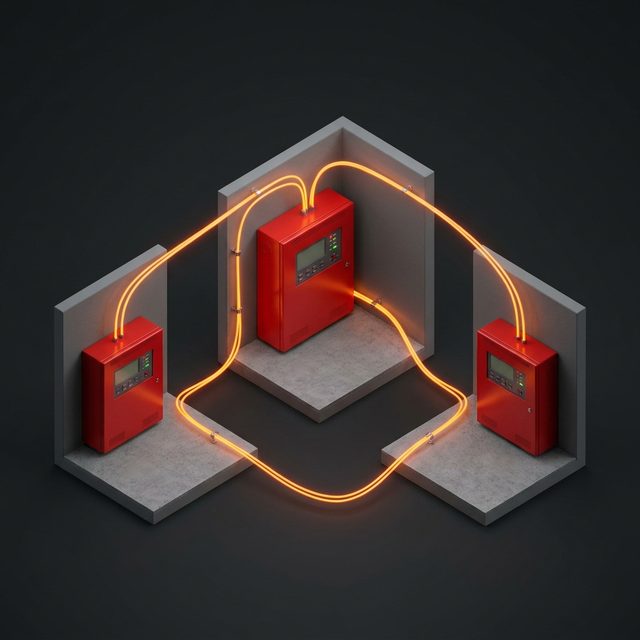
Networked panels: every trouble shows everywhere it needs to
When multiple control units are interconnected into one system, the interconnecting pathway is monitored for integrity, a fault on the interconnection must not prevent any panel from performing its own local functions, and alarm, supervisory and trouble signals from each unit are indicated at the designated master or at the location where the system is attended. The network also has to carry priority correctly — an alarm on one node can't wait behind trouble traffic from another — and the pathway class and survivability of the network are documented like any other circuit.
NFPA 72 reference
Chapter 23 — Protected Premises Fire Alarm Systems
23.8.2 Interconnected Fire Alarm Control Units (23.8.2.1 interconnecting pathways monitored; 23.8.2.2 signals indicated at the master/attended location; 23.8.2.3 pathway fault shall not prevent local operation); 12.3 pathway class
References use NFPA 72 2019/2022 numbering — section numbers can shift between editions, so confirm in the edition your AHJ has adopted.
On the job
A hospital's five panels share a fiber ring. A contractor cuts the ring in one spot: every panel keeps protecting its own wing (correct), but the security desk master shows nothing because the installer had only configured troubles from two of the five nodes. The remaining three nodes are mapped to the master and the ring break shows up as the trouble it always was.
Quick check
1. A break in the pathway between networked panels must:
2. Signals from each networked control unit must be indicated at:
Listen to this section
AI-narrated, about a minute.
Ask about this section
Get a plain-language explanation of what this rule requires and what to check on the job.
3 free explanations left on this device.