
NFPA 72 code sections · Fire Alarm Control Panels
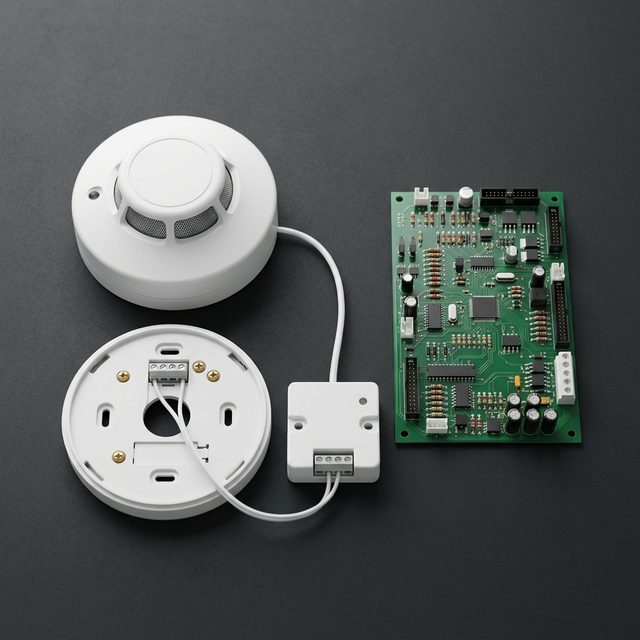
Listed together: detectors, bases, modules and the panel that drives them
Equipment used in a fire alarm system has to be listed for the purpose, and components that depend on each other have to be listed as compatible. Two-wire conventional smoke detectors are only used on an IDC whose control unit lists them as compatible, identified by the compatibility identifier on the detector and panel documentation. Addressable devices are tied to the protocol of their panel; software and firmware revisions must be ones the manufacturer lists as compatible. Mixing 'equivalent' detectors from another manufacturer on a conventional IDC can cause failure to alarm or failure to reset — even when the test button works.
NFPA 72 reference
Chapter 10 — Fundamentals
10.3 Equipment (10.3.1 listed for the purpose; 10.3.3 system components and software/firmware listed as compatible — two-wire detectors by compatibility identifier)
References use NFPA 72 2019/2022 numbering — section numbers can shift between editions, so confirm in the edition your AHJ has adopted.
On the job
An owner buys 50 two-wire smoke detectors online to replace aging heads. They mount in the old bases and alarm on canned smoke, but the IDC won't reset after alarm — the panel's current limits aren't compatible with the new heads. The compatibility identifier on the panel's data sheet lists three detector models; none is the one purchased.
Quick check
1. Two-wire smoke detectors may be used only with a control unit that:
2. A detector that alarms on test smoke but prevents the circuit from resetting is most likely:
Listen to this section
AI-narrated, about a minute.
Ask about this section
Get a plain-language explanation of what this rule requires and what to check on the job.
3 free explanations left on this device.