
NFPA 72 code sections · Signal Types & Monitoring
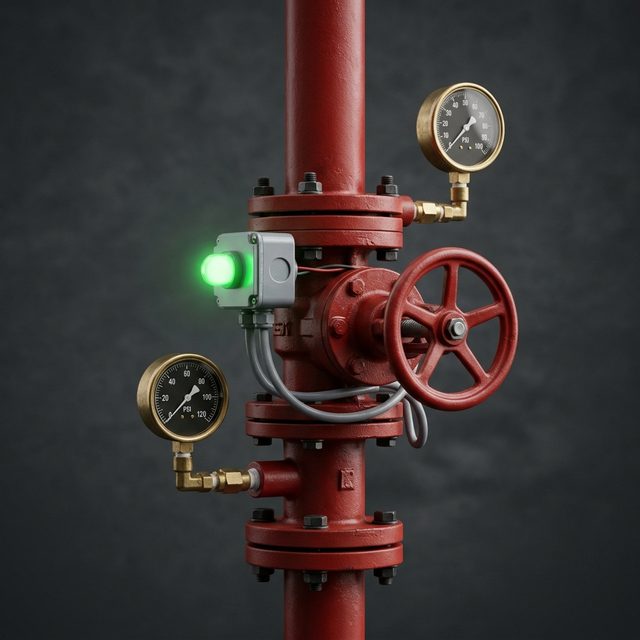
A supervisory signal needs both an 'off-normal' and a 'back to normal'
Supervisory signals report that a fire protection feature is off-normal — a closed sprinkler valve, low air pressure on a dry system, a tripped duct detector in some designs. The code requires the panel to indicate both the initiation of the supervisory condition and its restoration to normal, distinctly from alarm and trouble, and to keep the visible indication until it is restored. Restoration is a signal in its own right: the monitoring company and the owner need to know when the valve was reopened, not only when it was closed.
NFPA 72 reference
Chapter 10 — Fundamentals
10.14 Supervisory Signals (10.14.1 initiation and restoration indicated; 10.14.3 distinct from alarm/trouble)
References use NFPA 72 2019/2022 numbering — section numbers can shift between editions, so confirm in the edition your AHJ has adopted.
On the job
A fitter closes the riser valve to replace a gauge, and the panel sends a supervisory to the central station. He reopens it an hour later but the tamper switch was adjusted wrong and never restores. The panel still shows supervisory, the central station calls the owner, and the misadjusted switch is found — exactly the behavior the restoration requirement is for.
Quick check
1. Which event must produce a supervisory signal?
2. The panel must indicate a supervisory condition's:
Listen to this section
AI-narrated, about a minute.
Ask about this section
Get a plain-language explanation of what this rule requires and what to check on the job.
3 free explanations left on this device.