
NFPA 72 code sections · Basics of Fire Alarm Systems
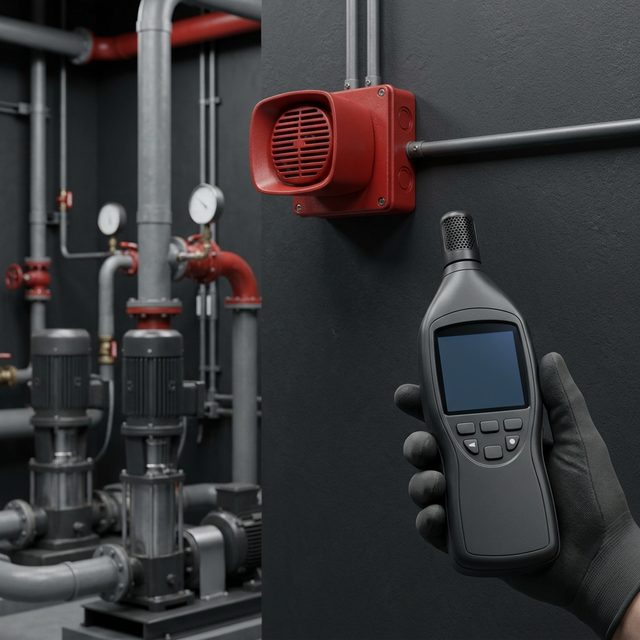
Alarm sound has to beat the room's noise, not just exist
In public mode, audible notification must be at least 15 dBA above the average ambient sound level, or 5 dBA above the maximum sound level lasting 60 seconds or more — whichever is greater — measured 5 feet above the floor. Sleeping areas need at least 75 dBA at the pillow, and the alarm must be the Temporal-3 pattern for evacuation. A horn that is "loud" in the hallway may still fail in a mechanical room or a noisy production floor, so the design is checked with a sound meter, not an ear.
NFPA 72 reference
Chapter 18 — Notification Appliances
18.4.4 Public Mode Audible Requirements (18.4.4.1); 18.4.5 Sleeping Area Requirements (75 dBA); 18.4.2 Temporal-3 evacuation signal
References use NFPA 72 2019/2022 numbering — section numbers can shift between editions, so confirm in the edition your AHJ has adopted.
On the job
During acceptance testing of a machine shop the meter reads 92 dBA ambient with the presses running. The single horn in the shop produces 95 dBA — only 3 dB over. The fix is adding appliances (or a strobe-only design where the AHJ allows it) until the alarm measures at least 107 dBA at 5 ft, or the space is treated as a visible-notification area.
Quick check
1. Public mode audible signals must be at least how much above average ambient?
2. Minimum sound level at the pillow in a sleeping area is:
3. Audible levels are measured at:
Listen to this section
AI-narrated, about a minute.
Ask about this section
Get a plain-language explanation of what this rule requires and what to check on the job.
3 free explanations left on this device.