
NFPA 72 code sections · Basics of Fire Alarm Systems
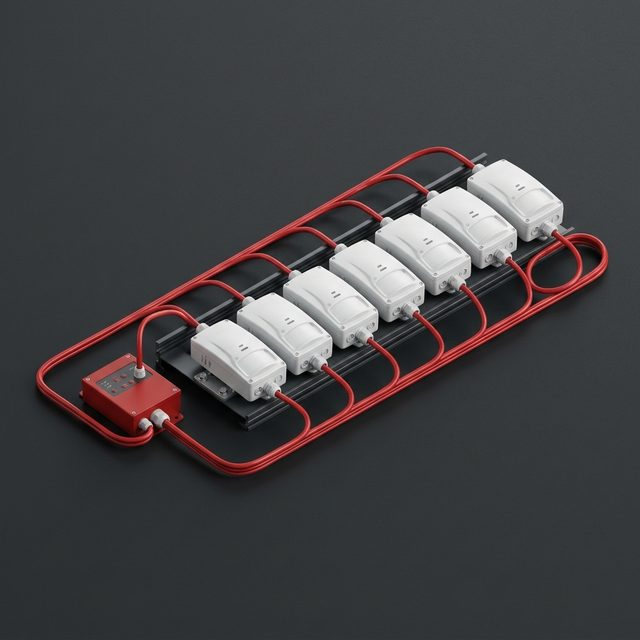
Circuit classes describe how a pathway survives a fault
Chapter 12 names every circuit by how it behaves when something goes wrong. Class B is the everyday circuit: one open or ground fault is reported as a trouble, and devices past the break stop working. Class A loops back to the panel, so a single open still leaves every device operating while the trouble is reported. Class X adds isolation so a short circuit is also survived. Class N covers network (Ethernet-style) pathways. The designer picks the class; the installer has to wire it so the panel can actually tell the difference.
NFPA 72 reference
Chapter 12 — Circuits and Pathways
12.3 Pathway Class Designations (12.3.1 Class A, 12.3.2 Class B, 12.3.5 Class N, 12.3.6 Class X)
References use NFPA 72 2019/2022 numbering — section numbers can shift between editions, so confirm in the edition your AHJ has adopted.
On the job
A hospital spec calls for Class A on the SLC. The installer lands the return conductors on the same terminals as the outgoing pair to save time. Everything works on the acceptance test — until a single open is simulated and half the loop drops out. The loop was wired Class B with extra copper; the return had to be moved to the panel's dedicated Class A terminals.
Quick check
1. On a Class B circuit, a single open conductor results in:
2. What distinguishes Class A from Class B?
3. Class X adds the ability to survive:
Listen to this section
AI-narrated, about a minute.
Ask about this section
Get a plain-language explanation of what this rule requires and what to check on the job.
3 free explanations left on this device.