
NFPA 72 code sections · Basics of Fire Alarm Systems
The panel gets its own breaker — and it's marked
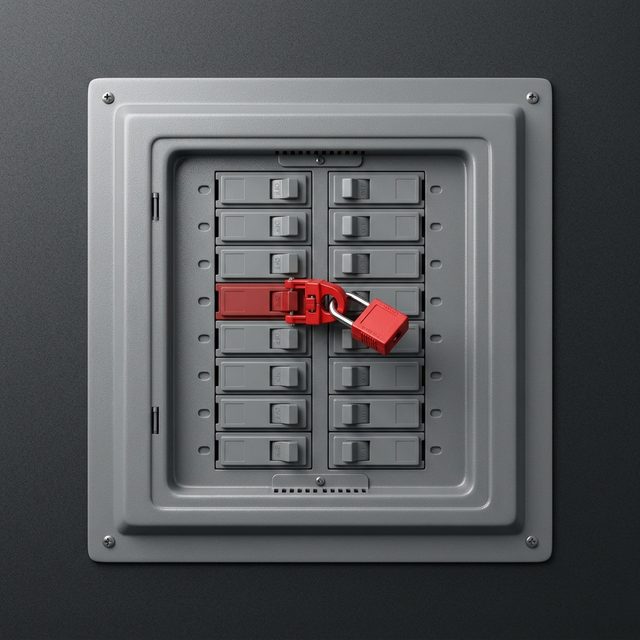
Primary power for a fire alarm control unit comes from a dedicated branch circuit. No other loads share it, the circuit disconnecting means (the breaker) must have a red marking, be accessible only to authorized personnel, and be identified as FIRE ALARM CIRCUIT. The location of that breaker is recorded at the control unit so a technician — or the fire department — can find it. A mechanical lock-on device is commonly used so the breaker can't be casually switched off.
NFPA 72 reference
Chapter 10 — Fundamentals
10.6.5 Primary Power Supply; 10.6.5.2 dedicated branch circuit, marking, and accessibility (10.6.5.2.1 through 10.6.5.2.3)
References use NFPA 72 2019/2022 numbering — section numbers can shift between editions, so confirm in the edition your AHJ has adopted.
On the job
A panel keeps going to battery every night. The installer finds it shares a breaker with the parking-lot lighting contactor, which trips on a photocell fault. Moving the panel to its own breaker, painting the handle red, adding the lock-on clip and labeling it FIRE ALARM CIRCUIT fixes the nuisance — and the code violation.
Quick check
1. The branch circuit feeding a fire alarm control unit must be:
2. The fire alarm breaker must be:
Listen to this section
AI-narrated, about a minute.
Ask about this section
Get a plain-language explanation of what this rule requires and what to check on the job.
3 free explanations left on this device.