
NFPA 72 code sections · Basics of Fire Alarm Systems
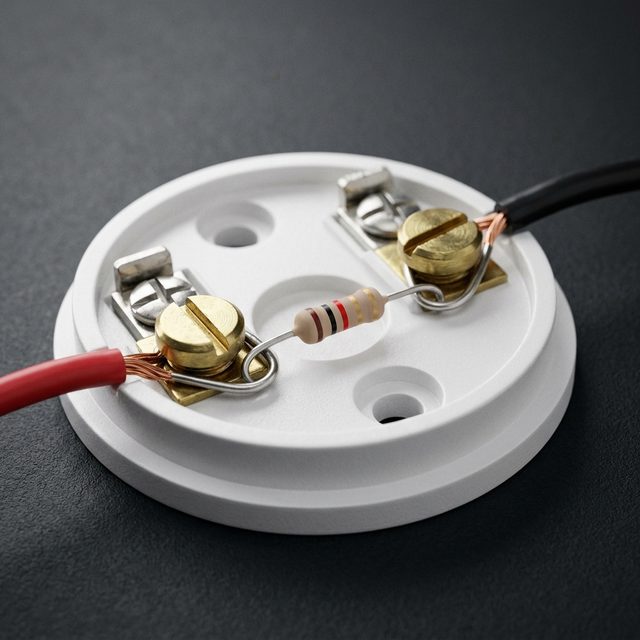
Every circuit has to prove it's still intact
Initiating device circuits, signaling line circuits, and notification appliance circuits must be monitored for integrity: a single open or a single ground fault anywhere on the pathway must be reported as a trouble within 200 seconds. That is why Class B circuits end in an end-of-line device and why a single device wired with a T-tap can silently defeat supervision — the panel still sees the end-of-line resistor even though the branch is cut off. The requirement also covers the power connections to remote power supplies and the connections to notification appliances.
NFPA 72 reference
Chapter 12 — Circuits and Pathways
12.6 Monitoring Integrity (12.6.1 installation conductors, 12.6.2 trouble indication within 200 s)
References use NFPA 72 2019/2022 numbering — section numbers can shift between editions, so confirm in the edition your AHJ has adopted.
On the job
A tech adds a horn/strobe for a new office by T-tapping the NAC in a junction box. The panel shows normal because the end-of-line resistor is still on the original run. Months later the new wire is cut by a drywall screw — no trouble, no strobe, and nobody knows until the annual test. Re-routing the NAC in and out of the new appliance restores supervision.
Quick check
1. A single open on a monitored circuit must be annunciated as a trouble within:
2. Why is a T-tap on a Class B circuit a code problem?
Listen to this section
AI-narrated, about a minute.
Ask about this section
Get a plain-language explanation of what this rule requires and what to check on the job.
3 free explanations left on this device.