
NFPA 72 code sections · Troubleshooting & Repairs
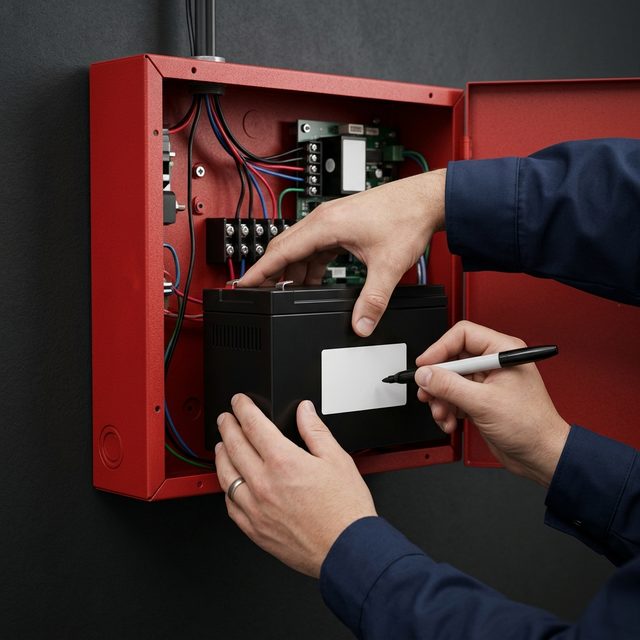
Batteries have a date — and a test schedule — for a reason
The number one root cause behind 'the system worked yesterday' is a battery set that quietly aged out. Batteries are marked with the installation date, load-tested on the semiannual interval and discharge-tested annually; a set that fails the test, or reaches the manufacturer's replacement interval (commonly 3-5 years for sealed lead-acid), is replaced as a set, never one battery at a time. The float voltage and the battery temperature are checked at every visit because a weak charger shortens battery life just as surely as age.
NFPA 72 reference
Chapter 14 / Chapter 10
Table 14.4.3.2 Batteries — sealed lead-acid: semiannual load voltage test, annual discharge test, replacement per manufacturer or on test failure; 10.6.10.3 battery date marking; 10.6.10 charger requirements
References use NFPA 72 2019/2022 numbering — section numbers can shift between editions, so confirm in the edition your AHJ has adopted.
On the job
A strip-center panel passes a lamp test and a battery voltage check every year — 27.3 V on float. The first real outage drops the system in 40 minutes: the batteries were nine years old, held almost no capacity, and nobody had ever done the discharge test. A dated label and a load tester are now part of every annual.
Quick check
1. A float-voltage reading of 27 V proves:
2. Batteries in a fire alarm panel are replaced:
Listen to this section
AI-narrated, about a minute.
Ask about this section
Get a plain-language explanation of what this rule requires and what to check on the job.
3 free explanations left on this device.