
NFPA 72 code sections · Capstone: Design, Explain & Defend
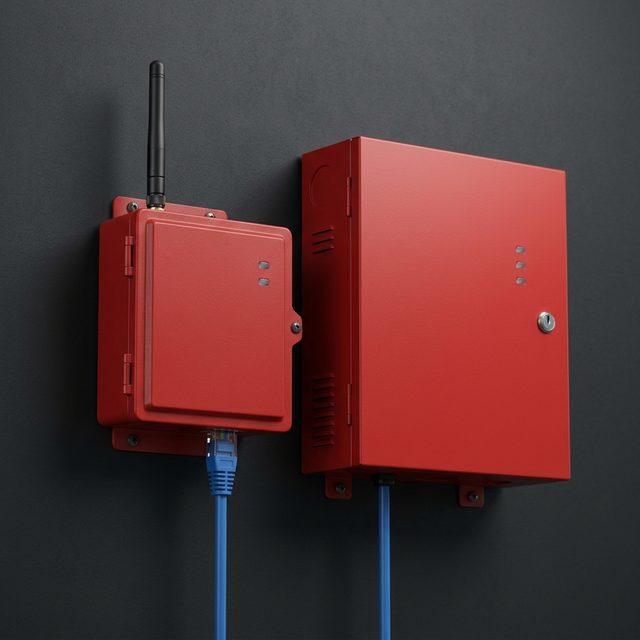
Getting the signal out: single path, 60 minutes; two paths, 6 hours
A protected-premises system is only as good as its path to the supervising station. Chapter 26 allows performance-based communication technologies — IP, cellular, radio — and governs them by outcome: a single communication path must be supervised so that its failure is annunciated at the supervising station within 60 minutes; where two paths are used, each path's failure is annunciated within 6 hours, and the failure of either path is reported at the protected premises as a trouble. Signals must be delivered within 90 seconds. Legacy digital alarm communicator transmitters (DACTs) on two phone lines, with 24-hour test signals, are increasingly restricted as copper lines disappear — know which technology your design uses and how it is supervised.
NFPA 72 reference
Chapter 26 — Supervising Station Alarm Systems
26.6.3 Communications Methods (26.6.3.1 performance-based technologies: single path failure annunciated within 60 min, dual path within 6 hours; 26.6.3.2 DACT requirements, 24-hour test); 26.6.3.1.1 90-second signal delivery
References use NFPA 72 2019/2022 numbering — section numbers can shift between editions, so confirm in the edition your AHJ has adopted.
On the job
A capstone design shows a DACT on 'two phone lines' for a new clinic. The reviewer asks where the two POTS lines come from in a building served only by fiber. The student switches to a dual-path IP/cellular communicator and can now explain the 6-hour supervision interval and what the panel shows when the cellular path drops.
Quick check
1. A single communication path to the supervising station must have a failure annunciated within:
2. With two communication paths, each path's failure must be annunciated within:
3. A legacy DACT typically uses:
Listen to this section
AI-narrated, about a minute.
Ask about this section
Get a plain-language explanation of what this rule requires and what to check on the job.
3 free explanations left on this device.