
NFPA 72 code sections · Capstone: Design, Explain & Defend
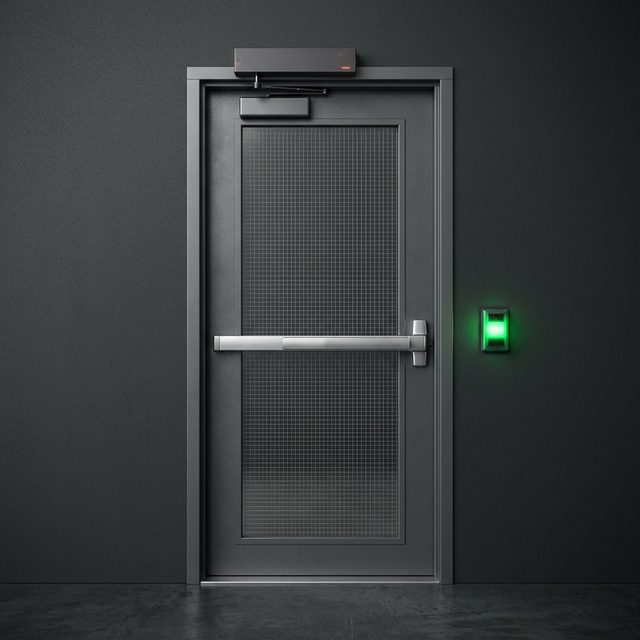
Locked egress doors unlock on fire alarm — fail safe, not fail secure
Where the building code allows access-controlled or delayed-egress locks on doors in the path of egress, NFPA 72 says how the fire alarm interacts with them. The fire alarm system must unlock the doors on activation of the alarm (and on loss of power to the lock system), the unlock must happen on any fire alarm signal — not just the zone near the door — and the doors stay unlocked until the fire alarm is manually reset, not merely silenced. The lock control is an emergency control function: a listed relay, monitored wiring, shown on the I/O matrix, and tested. Delayed-egress doors also need the 15-second (or AHJ-approved 30-second) release and the required signage, which come from the building code.
NFPA 72 reference
Chapter 21 — Emergency Control Function Interfaces
21.9 Electrically Locked Doors (21.9.1 unlock on fire alarm; 21.9.2 doors remain unlocked until the fire alarm is reset; 21.9.3 interface via listed relay/monitoring); 21.2 general requirements for emergency control functions
References use NFPA 72 2019/2022 numbering — section numbers can shift between editions, so confirm in the edition your AHJ has adopted.
On the job
A data center's card-reader doors are programmed to unlock only when a detector in the same room alarms, to keep the raised-floor area secure. During acceptance a pull station in the lobby is activated and the server-room egress doors stay locked. The AHJ fails the test: unlocking must occur on any fire alarm signal. The access control system is reprogrammed to a general fire alarm input.
Quick check
1. Access-controlled egress doors must unlock on:
2. After unlocking on fire alarm, doors may relock when:
3. The fire alarm's door-unlock interface is treated as:
Listen to this section
AI-narrated, about a minute.
Ask about this section
Get a plain-language explanation of what this rule requires and what to check on the job.
3 free explanations left on this device.