
NFPA 72 code sections · Fire Alarm Design Principles
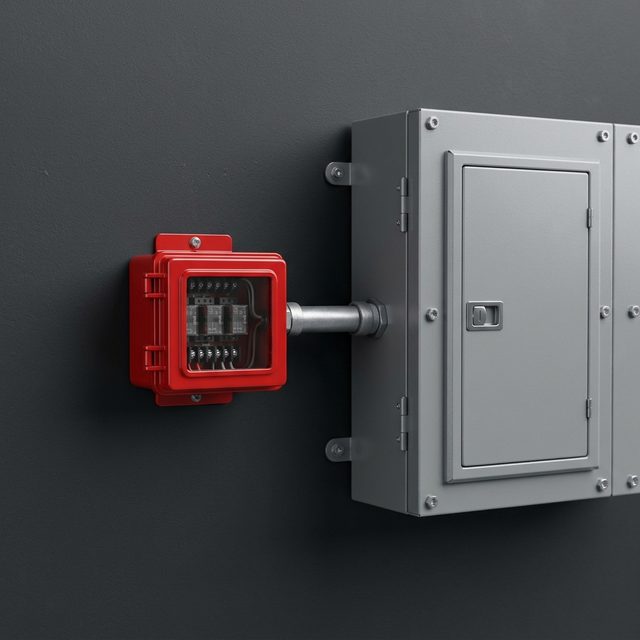
Emergency control relays sit within 3 feet of what they control
Door holders, smoke dampers, fan shutdown, door unlocking — every emergency control function the fire alarm drives goes through a listed relay or control module, and the code requires that relay to be located within 3 feet of the controlled circuit or appliance. The wiring from the panel to the relay is monitored for integrity; the short jumper from the relay to the controlled equipment is not, which is why it is kept short. The control circuit itself must be arranged so a fault on the controlled equipment can't take the fire alarm circuit down, and the function has to be shown on the I/O matrix and tested at acceptance.
NFPA 72 reference
Chapter 21 — Emergency Control Function Interfaces
21.2 General (21.2.4 relay within 3 ft / 1 m of the controlled circuit or appliance; 21.2.5 monitoring of the installation wiring to the relay); Table 14.4.3.2 emergency control functions tested
References use NFPA 72 2019/2022 numbering — section numbers can shift between editions, so confirm in the edition your AHJ has adopted.
On the job
An installer mounts a single relay module in the electrical room and runs unsupervised wire 120 feet to each of six smoke dampers. During a drywall renovation one damper lead is cut; the panel shows normal and the damper never closes. The AHJ requires a monitored control module at each damper — within 3 feet — and the problem shows up as a trouble the next time a wire is nicked.
Quick check
1. An emergency control relay must be located within what distance of the equipment it controls?
2. Why is the relay-to-equipment jumper kept short?
3. Emergency control functions must be:
Listen to this section
AI-narrated, about a minute.
Ask about this section
Get a plain-language explanation of what this rule requires and what to check on the job.
3 free explanations left on this device.