
NFPA 72 code sections · Fire Alarm Design Principles
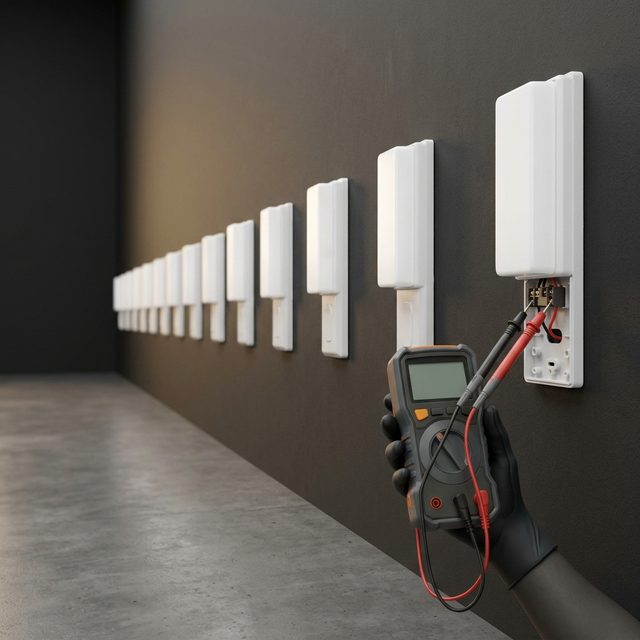
The last strobe on the circuit has to work on dead batteries
Notification appliances have a listed operating voltage range (regulated 24 V appliances are commonly listed 16-33 V). The designer calculates the voltage at the end of each NAC under worst-case conditions — all appliances in alarm, the power supply at its end-of-discharge battery voltage (about 20.4 V for a 24 V system), and the full conductor resistance both ways — and must show that the farthest appliance stays above its minimum. This is where conductor size, circuit length and appliance count get traded off; the calculation is part of the required shop-drawing submittal and the AHJ can require it be verified by measurement at acceptance.
NFPA 72 reference
Chapter 7 / Chapter 18
7.4.7 voltage-drop calculations for notification appliance circuits; 18.3.2 listed appliances operated within their rated voltage range; 10.6.7 secondary power (battery end-of-discharge as the design condition)
References use NFPA 72 2019/2022 numbering — section numbers can shift between editions, so confirm in the edition your AHJ has adopted.
On the job
A 14 AWG NAC runs 900 feet to the end of a parking garage with twelve 75-candela strobes. On paper at 24 V it works; at 20.4 V end-of-battery it falls to 14.8 V at the last strobe. The designer splits it into two circuits from a remote power supply at the midpoint rather than upsizing to 10 AWG — cheaper, and it passes the calc.
Quick check
1. The NAC voltage-drop calculation is run at:
2. Options when the last appliance falls below its minimum voltage include:
Listen to this section
AI-narrated, about a minute.
Ask about this section
Get a plain-language explanation of what this rule requires and what to check on the job.
3 free explanations left on this device.