
NFPA 72 code sections · Installation Guidelines
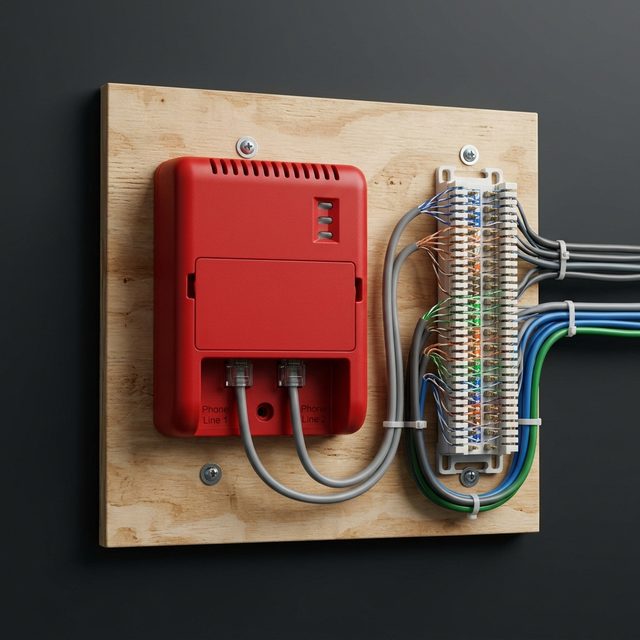
A DACT seizes the line — install it ahead of every phone in the building
Where a digital alarm communicator transmitter is still used, it has to be able to take control of the telephone line the instant it needs to send a signal. That means the DACT is connected ahead of all other telephone equipment on that line (the RJ31X-style jack), so an off-hook fax or phone can't block an alarm. It must also detect loss of the line and report a trouble, send a test signal every 24 hours on each path, and use two paths — which as copper lines vanish increasingly means a second path that is cellular or IP.
NFPA 72 reference
Chapter 26 — Supervising Station Alarm Systems
26.6.3.2 Digital Alarm Communicator Systems (26.6.3.2.1 DACT requirements — line seizure ahead of other equipment, two transmission channels, 24-hour test signal, line fault detection)
References use NFPA 72 2019/2022 numbering — section numbers can shift between editions, so confirm in the edition your AHJ has adopted.
On the job
A restaurant's monitoring stops working whenever the hostess stand phone is in use. The DACT had been wired to a spare jack downstream of the phone system instead of ahead of it, so line seizure never worked. Moving the connection to an RJ31X at the demarcation point fixes it, and the technician documents the second path as cellular because the owner is dropping the second copper line.
Quick check
1. A DACT must be connected:
2. A DACT sends a test signal at least every:
3. If the phone line is cut, the DACT must:
Listen to this section
AI-narrated, about a minute.
Ask about this section
Get a plain-language explanation of what this rule requires and what to check on the job.
3 free explanations left on this device.