
NFPA 72 code sections · Installation Guidelines
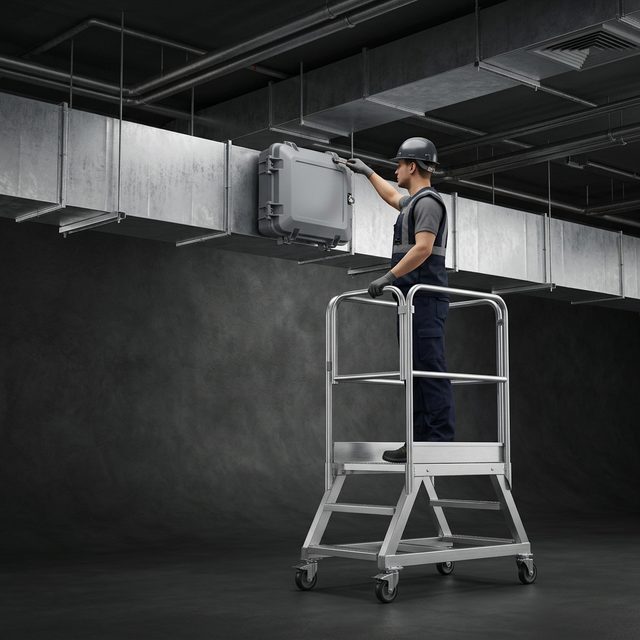
Install devices where a tech can reach them — and where they'll survive
Every initiating device has to be installed per its listing and the manufacturer's published instructions, in a location accessible for periodic inspection, testing and maintenance, and protected from mechanical damage where it is exposed to it. A detector above a 30-foot atrium with no lift access, a heat detector behind a permanent duct, or a pull station in a loading dock with no guard all technically 'work' and all fail the installation rules. Environmental listing matters too: an indoor detector in an unheated canopy is outside its listed temperature and humidity range.
NFPA 72 reference
Chapter 17 — Initiating Devices
17.4 General Requirements (17.4.1 installed per listing and manufacturer's instructions; 17.4.5 accessible for ITM; 17.4.6 / 17.4.7 protection from mechanical damage and environmental conditions within the device's listing)
References use NFPA 72 2019/2022 numbering — section numbers can shift between editions, so confirm in the edition your AHJ has adopted.
On the job
A big-box store's beam detectors are mounted on the roof-deck joists 38 feet up with no catwalk. Annual testing requires a rented boom lift and a night shift — $4,000 a year the owner never budgeted. On the next store the designer mounts the beams on the walls at 24 feet, reachable from a scissor lift during normal hours.
Quick check
1. Initiating devices must be installed:
2. A pull station in a loading dock subject to forklift traffic should have:
Listen to this section
AI-narrated, about a minute.
Ask about this section
Get a plain-language explanation of what this rule requires and what to check on the job.
3 free explanations left on this device.