
NFPA 72 code sections · Smoke & Heat Detector Technologies
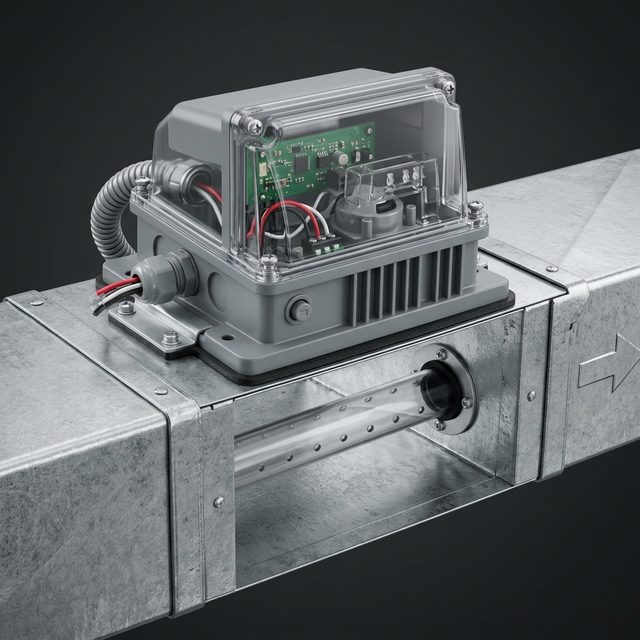
Duct detectors protect the ductwork, not the room
Smoke detectors in air ducts exist to shut down air handlers and close dampers so smoke isn't pumped through the building — they are never a substitute for open-area detection. They are installed where NFPA 90A requires them, with sampling tubes oriented to the airflow and located where airflow is reasonably uniform (not right at a bend or filter). Because a duct detector is an emergency control function, the code permits it to produce a supervisory signal instead of an alarm when the building's design calls for it, and the HVAC shutdown must still happen.
NFPA 72 reference
Chapter 17 — Initiating Devices / Chapter 21 — Emergency Control Function Interfaces
17.7.5 Smoke Detectors for Control of Smoke Spread (17.7.5.5 installation in ducts); 21.7 HVAC Systems (duct detectors permitted to initiate a supervisory signal where used solely for HVAC shutdown)
References use NFPA 72 2019/2022 numbering — section numbers can shift between editions, so confirm in the edition your AHJ has adopted.
On the job
An office tenant complains that a corridor 'smoke detector' never alarmed during a small fire. It was a duct detector in the return plenum above the ceiling, correctly programmed as supervisory, and it did its job: the air handler shut down and the damper closed. The corridor itself had no spot detectors because the building code didn't require them — the fix was educating the tenant, not re-wiring the device.
Quick check
1. The primary purpose of a duct smoke detector is to:
2. A duct detector used solely for HVAC shutdown is permitted to initiate a:
3. Duct detector sampling tubes should be located:
Listen to this section
AI-narrated, about a minute.
Ask about this section
Get a plain-language explanation of what this rule requires and what to check on the job.
3 free explanations left on this device.