
NFPA 72 code sections · Smoke & Heat Detector Technologies
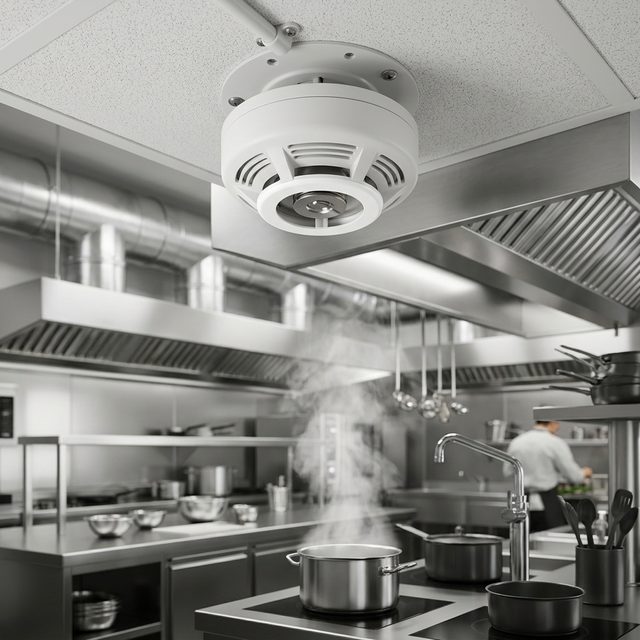
Pick a heat detector at least 20°F above the hottest the room gets
Fixed-temperature and rate-compensated heat detectors are selected so their rated operating temperature is at least 20°F (11°C) above the maximum expected ambient temperature at the ceiling. The code color-codes the ratings — ordinary (135-174°F) is uncolored, intermediate (175-249°F) is white, high (250-324°F) is blue, and so on — so an inspector can read the class from the floor. Spacing for heat detectors comes from the listing (commonly 50 ft), and that listed spacing is reduced for ceilings above 10 feet per the code's table.
NFPA 72 reference
Chapter 17 — Initiating Devices
17.6.2.1 temperature classification and 20°F above maximum ambient; Table 17.6.2.1 color codes; 17.6.3.1 listed spacing and Table 17.6.3.5.1 ceiling-height reduction
References use NFPA 72 2019/2022 numbering — section numbers can shift between editions, so confirm in the edition your AHJ has adopted.
On the job
A commercial kitchen hood area reaches 150°F at the ceiling in summer. The original drawings call for ordinary 135°F detectors — they would trip on a hot Tuesday. The installer swaps in 194°F intermediate (white) detectors, which satisfy the 20°F margin, and notes the substitution on the as-builts for the AHJ.
Quick check
1. A fixed-temperature heat detector should be rated at least how far above maximum ambient?
2. A white color code on a heat detector indicates:
3. Listed heat detector spacing must be reduced when:
Listen to this section
AI-narrated, about a minute.
Ask about this section
Get a plain-language explanation of what this rule requires and what to check on the job.
3 free explanations left on this device.