
NFPA 72 code sections · Case Studies & Incident Reviews
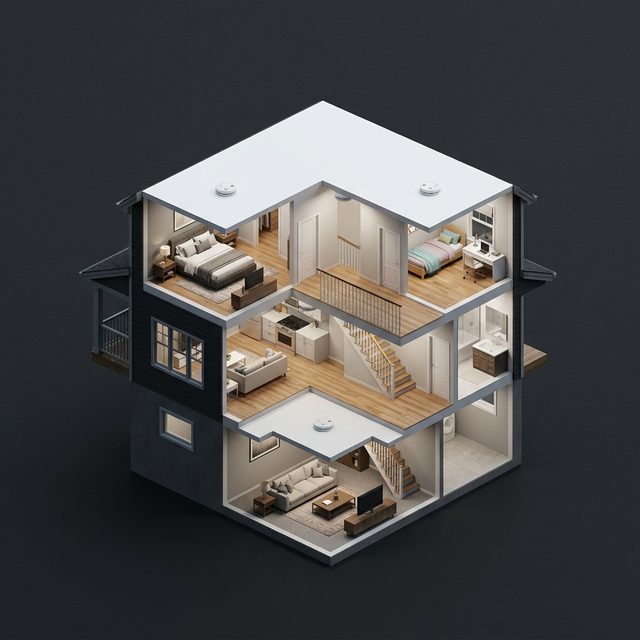
Where smoke alarms go in a home: every sleeping room, outside them, every level
Most fire deaths happen in homes, and Chapter 29 is NFPA 72's residential chapter. New and substantially renovated dwellings need smoke alarms in every sleeping room, outside each separate sleeping area in the immediate vicinity of the bedrooms, and on every level including basements. They are mounted on the ceiling or high on the wall per Chapter 29's placement rules, kept at least 10 feet from cooking appliances (or 6 feet if photoelectric) to limit nuisance alarms, and installed per the manufacturer's instructions. Heat alarms can supplement but never replace smoke alarms in sleeping areas.
NFPA 72 reference
Chapter 29 — Single- and Multiple-Station Alarms and Household Fire Alarm Systems
29.5.1 Required Detection (29.5.1.1 all sleeping rooms, outside each sleeping area, each level); 29.8.3 location and mounting (distance from cooking appliances); 29.8.1 installation per manufacturer's instructions
References use NFPA 72 2019/2022 numbering — section numbers can shift between editions, so confirm in the edition your AHJ has adopted.
On the job
A fatal house-fire review finds one working smoke alarm — in the hallway, 25 feet from a closed bedroom door — and none in the basement where the fire started. The home had met the code when built in 1978; the town's rental-inspection program now requires the Chapter 29 locations at every change of tenant.
Quick check
1. Household smoke alarms are required in:
2. To limit nuisance alarms, a smoke alarm is kept at least how far from a cooking appliance?
3. A heat alarm in a bedroom:
Listen to this section
AI-narrated, about a minute.
Ask about this section
Get a plain-language explanation of what this rule requires and what to check on the job.
3 free explanations left on this device.