
NFPA 72 code sections · Case Studies & Incident Reviews
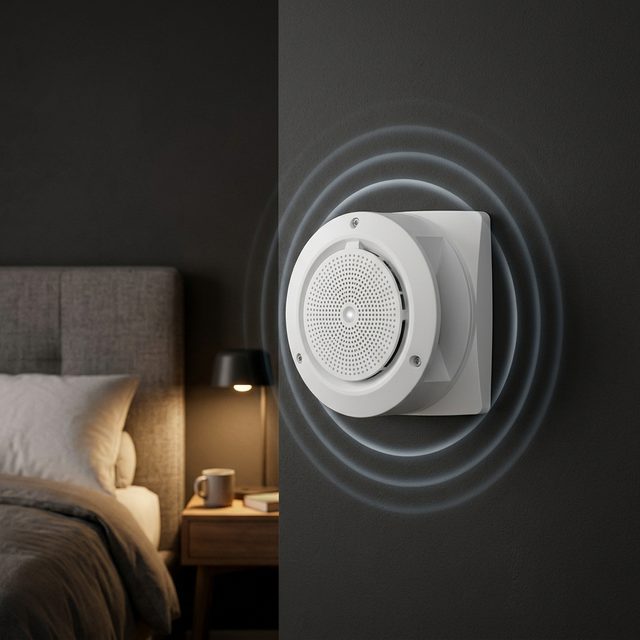
Why sleeping areas need the 520 Hz low-frequency tone
Research after fatal fires showed that children, older adults, heavy sleepers and people with mild hearing loss often do not wake to a 3 kHz horn. The code now requires that where audible appliances serve sleeping areas — hotel guest rooms, dormitories, apartments under a fire alarm system — the signal is a low-frequency 520 Hz square-wave tone, still in the Temporal-3 pattern, and still 75 dBA at the pillow. Standard horns are not acceptable in those rooms on new and retrofit installations where the building code invokes the requirement.
NFPA 72 reference
Chapter 18 — Notification Appliances
18.4.5 Sleeping Area Requirements (18.4.5.1 75 dBA at the pillow; 18.4.5.3 low-frequency 520 Hz ± 10% square wave where required for sleeping areas, effective 2014); 18.4.2 Temporal-3 pattern
References use NFPA 72 2019/2022 numbering — section numbers can shift between editions, so confirm in the edition your AHJ has adopted.
On the job
An incident review of a dormitory fire finds that a resident with moderate hearing loss slept through a 94 dBA horn in the corridor. The university's next renovation puts 520 Hz low-frequency sounders in every sleeping room — and a follow-up drill confirms residents wake within seconds.
Quick check
1. The low-frequency sleeping-area signal is centered at:
2. The low-frequency tone is used in:
3. Even with the low-frequency tone, the sleeping-area level must be at least:
Listen to this section
AI-narrated, about a minute.
Ask about this section
Get a plain-language explanation of what this rule requires and what to check on the job.
3 free explanations left on this device.