
NFPA 72 code sections · Case Studies & Incident Reviews
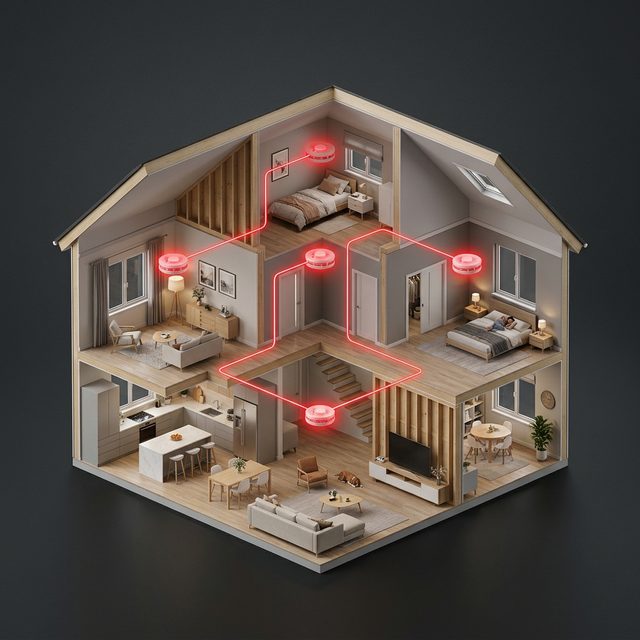
When one smoke alarm sounds, they all sound
A smoke alarm that wakes nobody because it is in the basement is the recurring theme of residential fire investigations. Chapter 29 requires that where more than one smoke alarm is required in a dwelling unit, they are interconnected — by wire or by listed wireless interconnection — so activation of any one sounds all of them. Combination smoke/CO alarms must produce the distinct smoke (T-3) and CO (T-4) signals at every interconnected unit so the household knows which emergency it is. Battery-only alarms are allowed in existing dwellings only as the building code permits, and even then the interconnection requirement increasingly applies.
NFPA 72 reference
Chapter 29 — Household Fire Alarm Systems
29.8.2 Interconnection (activation of any required smoke alarm sounds all required alarms in the dwelling unit; wireless interconnection permitted where listed); 29.8.4 / 29.9 signal patterns for smoke and CO
References use NFPA 72 2019/2022 numbering — section numbers can shift between editions, so confirm in the edition your AHJ has adopted.
On the job
A two-story home has code-compliant alarms on each level, none interconnected. A dryer fire in the basement sets off the basement alarm at 2 a.m.; the family upstairs hears nothing until smoke reaches the second floor. The replacement alarms are a listed wireless-interconnected set — no new wiring, and every alarm sounds within seconds of the first.
Quick check
1. When a dwelling requires more than one smoke alarm, they must be:
2. Wireless interconnection between smoke alarms is:
Listen to this section
AI-narrated, about a minute.
Ask about this section
Get a plain-language explanation of what this rule requires and what to check on the job.
3 free explanations left on this device.