
NFPA 72 code sections · Emergency Communication Systems
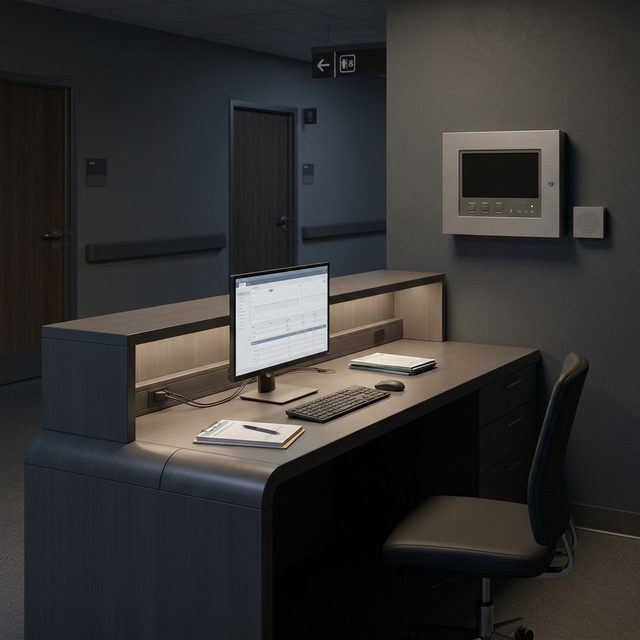
Private mode: alert the staff, not the patients
Notification can be designed for public mode (everyone hears it) or private mode (only staff who will act on it — a nurses' station, a control room). In private operating mode the audible signal only has to be at least 45 dBA and 10 dBA above average ambient, instead of the 15 dBA required in public mode, and the full visible-appliance coverage of public mode isn't required. Private mode is only allowed where the occupancy's building code and the AHJ permit it, and staff must be trained to respond to it — it is a response plan, not a volume setting.
NFPA 72 reference
Chapter 18 — Notification Appliances
18.4.3 Private Mode Audible Requirements (≥ 45 dBA and ≥ 10 dBA above ambient); 18.4.4 Public Mode Audible Requirements (≥ 15 dBA above ambient) for comparison; 18.4.1 operating mode
References use NFPA 72 2019/2022 numbering — section numbers can shift between editions, so confirm in the edition your AHJ has adopted.
On the job
A memory-care wing is designed public mode. During the first drill, residents panic and several fall. The owner, the AHJ and the designer agree to private mode: chimes and annunciation at the nurses' stations, staff carry pagers, and the written emergency plan is updated. Strobes stay in the public corridors where the building code still requires them.
Quick check
1. In private operating mode the audible signal must be at least:
2. Private mode is intended to alert:
Listen to this section
AI-narrated, about a minute.
Ask about this section
Get a plain-language explanation of what this rule requires and what to check on the job.
3 free explanations left on this device.