
NFPA 72 code sections · Emergency Communication Systems
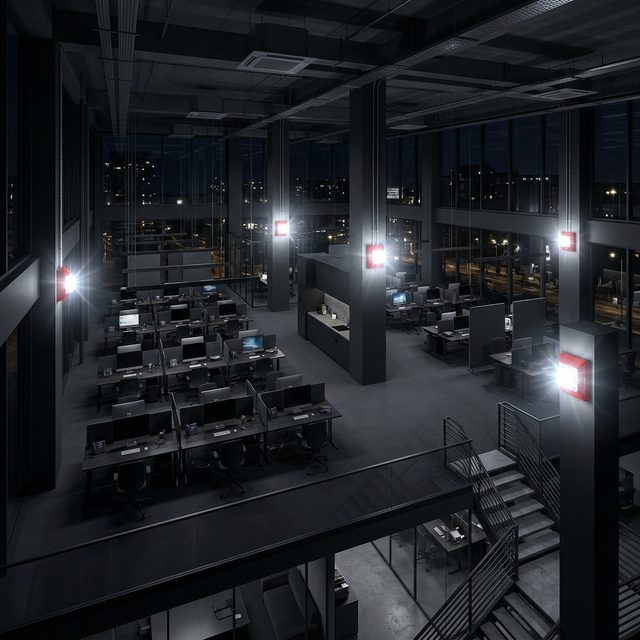
More than two strobes in view? They have to flash together
Strobes flash between 1 and 2 times per second. Where more than two visible appliances are in the same room or any field of view, they must be synchronized so the composite flash rate stays within that range — unsynchronized strobes can combine into a flicker that triggers photosensitive seizures. Room spacing comes from the Chapter 18 tables: a 15-candela strobe covers a 20-by-20-foot room from the wall, and bigger rooms need higher candela or multiple appliances. Ceiling-mounted strobes have their own table based on ceiling height, and a strobe in the middle of a wall doesn't 'count double'.
NFPA 72 reference
Chapter 18 — Notification Appliances
18.5.4 Characteristics of Visible Appliances (flash rate 1-2 Hz; synchronization where more than two appliances are in a field of view); 18.5.5.4 Room Spacing for Wall-Mounted Appliances (Table 18.5.5.4.1(a)); 18.5.5.5 Ceiling-Mounted Appliances
References use NFPA 72 2019/2022 numbering — section numbers can shift between editions, so confirm in the edition your AHJ has adopted.
On the job
An open office gets six new strobes on a NAC extender. Four were set to sync and two older ones have no sync capability, so the inspector sees a ragged, overlapping flash pattern across the room. The two legacy appliances are replaced with the same synchronized model and the extender's sync protocol is enabled.
Quick check
1. Synchronization of visible appliances is required when:
2. The permitted flash rate for a strobe is:
3. A 15 cd wall strobe is listed in the room-spacing table for a room up to:
Listen to this section
AI-narrated, about a minute.
Ask about this section
Get a plain-language explanation of what this rule requires and what to check on the job.
3 free explanations left on this device.