
NFPA 72 code sections · Wiring & Circuitry
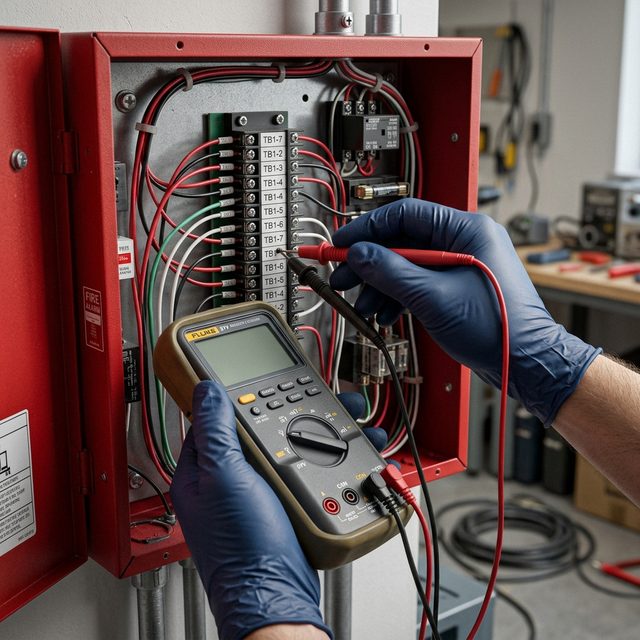
Before the panel is energized, every circuit gets meter-tested
Acceptance (and reacceptance) testing starts with the conductors, not the devices. Chapter 14's test table requires metallic conductors to be checked for stray (foreign) voltage, ground faults, short-circuit faults and loop resistance, with the results recorded — and the loop resistance has to be within the manufacturer's published limit for the panel. Fire alarm systems also have to detect and annunciate a single ground fault as a trouble, because a second ground fault could short out a circuit or defeat supervision. Finding a 20-ohm-high SLC on the bench beats finding it after the ceiling is closed.
NFPA 72 reference
Chapter 14 — Inspection, Testing, and Maintenance / Chapter 10
Table 14.4.3.2 Conductors — metallic (stray voltage, ground faults, short-circuit faults, loop resistance); 14.4.1 acceptance testing; 10.6.9 / 10.17 ground-fault detection and indication as a trouble signal
References use NFPA 72 2019/2022 numbering — section numbers can shift between editions, so confirm in the edition your AHJ has adopted.
On the job
A new SLC measures 62 ohms loop resistance against a 40-ohm manufacturer limit. Rather than hoping the panel copes, the installer isolates the run and finds a cold splice in a junction box where the wire nut only caught the insulation. Re-terminated, the loop reads 23 ohms and every device polls cleanly on first power-up.
Quick check
1. Which test is NOT part of the Chapter 14 conductor tests?
2. A single ground fault on a fire alarm circuit must be:
3. Loop resistance limits come from:
Listen to this section
AI-narrated, about a minute.
Ask about this section
Get a plain-language explanation of what this rule requires and what to check on the job.
3 free explanations left on this device.