
NFPA 72 code sections · Wiring & Circuitry
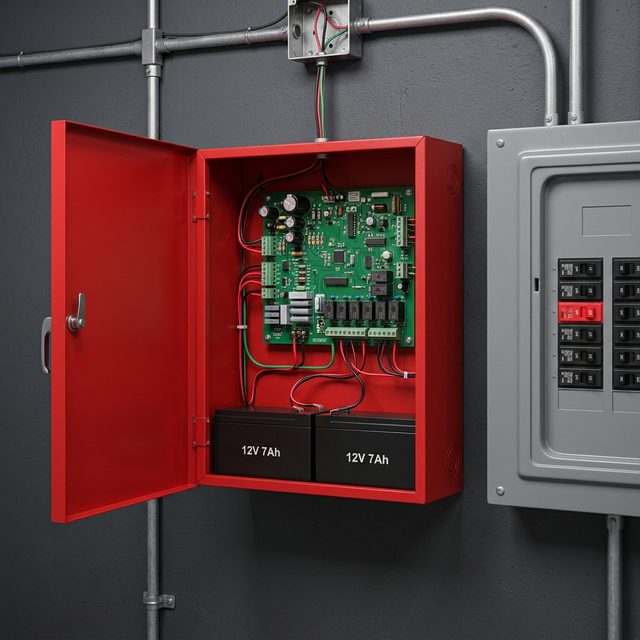
A NAC extender is a control unit: dedicated branch circuit, batteries, supervision
Remote power supplies and NAC extenders carry the same obligations as the main panel. Each one needs primary power from a dedicated branch circuit with the red-marked, FIRE ALARM CIRCUIT-labeled breaker, secondary power (batteries) sized for the same 24-hour standby plus alarm period, and its own monitoring for integrity — AC loss, battery trouble, ground fault and every connected NAC are supervised, and all troubles report back to the fire alarm control unit through a supervised interface. A booster that quietly loses AC and runs its batteries flat is a system that fails silently.
NFPA 72 reference
Chapter 10 — Fundamentals / Chapter 12
10.6.5 primary power (dedicated branch circuit applies to each control unit and power supply); 10.6.7 secondary power; 12.6 monitoring integrity of power supply connections and notification appliance circuits; 10.6.9 / 10.6.10 power supply supervision
References use NFPA 72 2019/2022 numbering — section numbers can shift between editions, so confirm in the edition your AHJ has adopted.
On the job
A strip mall booster is plugged into a convenience receptacle in the tenant's electrical room. A new tenant unplugs it to charge a floor scrubber; 48 hours later the booster's batteries are flat and its trouble output was never wired back to the panel. The fix: a dedicated breaker with lock-on and label, hard-wired connection, and the booster's trouble contact landed on a supervised monitor module.
Quick check
1. A remote NAC power supply must have:
2. Troubles at a remote power supply must:
Listen to this section
AI-narrated, about a minute.
Ask about this section
Get a plain-language explanation of what this rule requires and what to check on the job.
3 free explanations left on this device.