
NFPA 72 code sections · Wiring & Circuitry
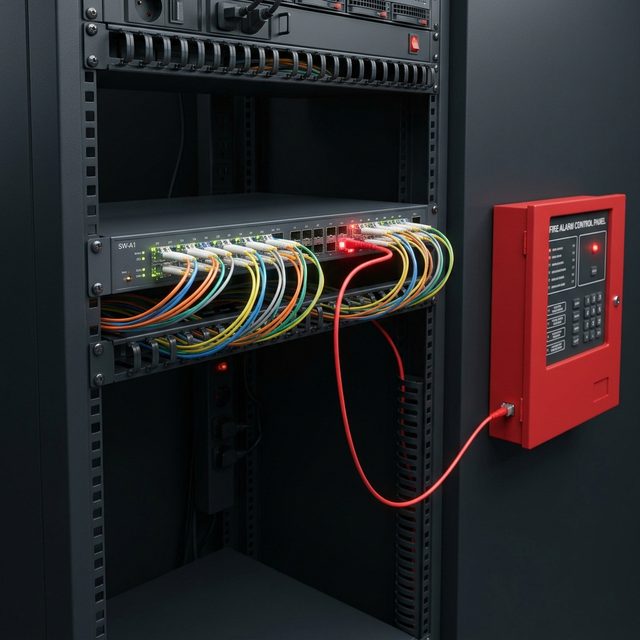
Shared pathways: when fire alarm rides on the building's network
When fire alarm signals travel on a pathway that also carries other traffic — a network switch, a fiber backbone, a building automation bus — the code labels it a shared pathway and assigns a level. Level 0 shares equipment and traffic with no priority; Level 1 gives life-safety traffic priority over the other data; Level 2 means the fire alarm traffic is segregated (its own VLAN or channel) and prioritized; Level 3 means the pathway is dedicated to life-safety equipment only. The designer specifies the level, and the IT department can't quietly change it later.
NFPA 72 reference
Chapter 12 — Circuits and Pathways
12.5 Shared Pathway Designations (12.5.1 Level 0, 12.5.2 Level 1, 12.5.3 Level 2, 12.5.4 Level 3); 12.3.5 Class N pathways
References use NFPA 72 2019/2022 numbering — section numbers can shift between editions, so confirm in the edition your AHJ has adopted.
On the job
A hospital networks four fire alarm panels over the campus fiber. Two years later IT re-architects the core and the panels start losing contact at night during backups — the fire alarm traffic had been Level 0, fighting for bandwidth with the data center. The campus specification is revised to Level 2 (segregated VLAN with QoS priority), and the panels' network troubles stop.
Quick check
1. A shared pathway at Level 3 is:
2. Level 1 shared pathway gives:
Listen to this section
AI-narrated, about a minute.
Ask about this section
Get a plain-language explanation of what this rule requires and what to check on the job.
3 free explanations left on this device.