
NFPA 72 code sections · Wiring & Circuitry
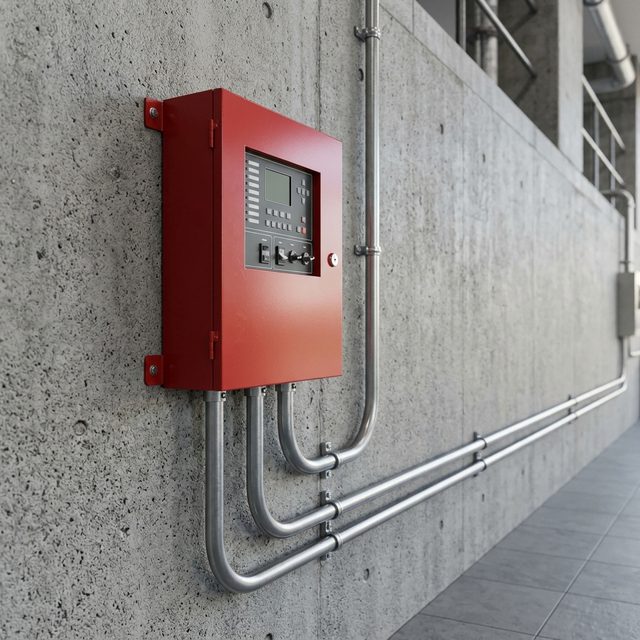
Class A only works if the return isn't in the same conduit
A Class A circuit survives a single open because the panel feeds both ends — but only if one event can't take out both the outgoing and the return conductors. That's why the code and its annex call for separate routing: the two legs leave the panel in separate raceways or cables and stay apart, with at least 1 foot vertical or 4 feet horizontal separation suggested, except at the panel and within short distances where they must come together. A Class A loop pulled as a single cable is Class B with extra copper.
NFPA 72 reference
Chapter 12 — Circuits and Pathways
12.3.1 Class A pathways (operational capability during a single open or ground fault); A.12.3.1 routing guidance — outgoing and return conductors in separate raceways/cables, 1 ft vertical / 4 ft horizontal separation except at the control unit
References use NFPA 72 2019/2022 numbering — section numbers can shift between editions, so confirm in the edition your AHJ has adopted.
On the job
A tech troubleshooting a dropped SLC notices the whole loop went down from one damaged wire — on a Class A circuit that should be impossible. In the ceiling she finds the outgoing and return legs sharing a single cable, so the drywall screw cut both. The return is re-pulled through a separate path and the next simulated break only generates a trouble.
Quick check
1. Why must Class A outgoing and return conductors be routed separately?
2. Where are the two legs of a Class A circuit allowed to come together?
Listen to this section
AI-narrated, about a minute.
Ask about this section
Get a plain-language explanation of what this rule requires and what to check on the job.
3 free explanations left on this device.