
NFPA 72 code sections · Devices & Signal Flow: How the Panel Hears and Speaks
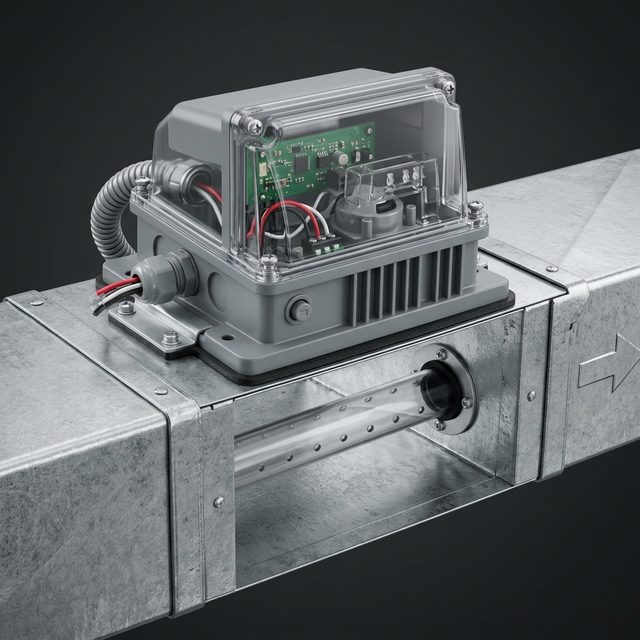
Duct smoke detector: tells the panel to stop the fans
A duct smoke detector samples air moving through an HVAC duct and reports when it finds smoke. Its purpose is to keep the air handler from spreading smoke through the building, so when the panel receives its signal it commands the fan shutdown and damper closure that the sequence of operation assigns. Depending on the design and the AHJ, the panel treats the duct detector's report either as an alarm (occupant notification) or as a supervisory signal (staff notified, fans stopped, no evacuation) — but the HVAC shutdown happens either way.
NFPA 72 reference
Chapter 17 — Initiating Devices / Chapter 21
17.7.5 Smoke Detectors for Control of Smoke Spread (17.7.5.5 detectors in air duct systems); 21.7 HVAC Systems (21.7.4 duct detectors used solely for HVAC shutdown permitted to initiate a supervisory signal)
References use NFPA 72 2019/2022 numbering — section numbers can shift between editions, so confirm in the edition your AHJ has adopted.
On the job, step by step
- Smoke from a smoldering wastebasket is drawn into the return duct serving the fourth floor.
- The return-air duct detector samples the smoke and reports to the panel.
- The panel, programmed to treat this detector as supervisory, shows 'SUPERVISORY — AHU-4 RETURN DUCT' and commands AHU-4 to shut down and its smoke damper to close.
- Building staff are notified by the supervising station and investigate; the open-area detector in the office then alarms, and full notification follows.
- After the event, the fans are restarted manually by building staff — not by the fire alarm panel.
Quick check
1. The main job of a duct smoke detector is to:
2. A duct detector used solely for HVAC shutdown may be programmed as a:
Listen to this section
AI-narrated, about a minute.
Ask about this section
Get a plain-language explanation of what this rule requires and what to check on the job.
3 free explanations left on this device.