
NFPA 72 code sections · Devices & Signal Flow: How the Panel Hears and Speaks
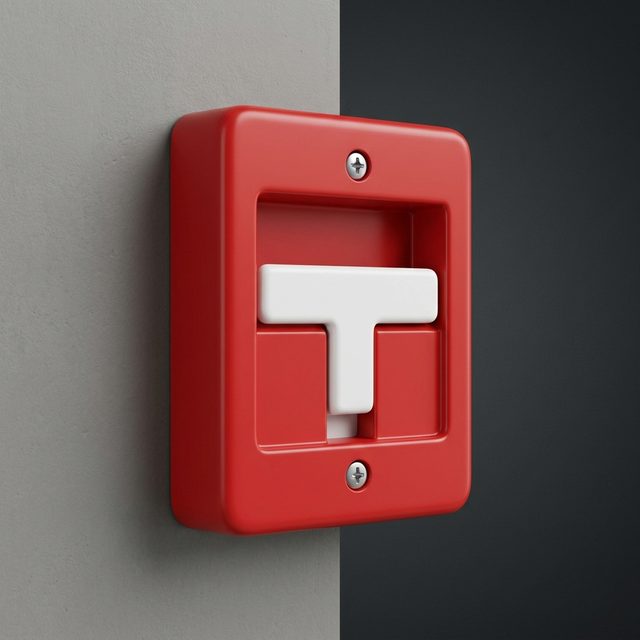
Manual fire alarm box (pull station): a person's hand becomes an alarm signal
A manual fire alarm box lets any occupant report a fire. Pulling the handle closes (or opens, on a monitored circuit) a switch; the panel sees the change of state as an alarm signal from that device or zone. Because a person made the decision, the panel is not allowed to second-guess it: alarm verification and positive alarm sequence apply to automatic detectors, never to pull stations. Boxes are installed within 5 feet of each exit door on every floor, at a readily accessible height, so the signal path starts where people are leaving.
NFPA 72 reference
Chapter 17 — Initiating Devices / Chapter 23
17.15 Manual Fire Alarm Boxes (17.14 in the 2016 edition): 17.15.4 location within 5 ft of exits; 23.8.5.4 alarm verification limited to smoke detectors; 10.11.1 panel response within 10 seconds
References use NFPA 72 2019/2022 numbering — section numbers can shift between editions, so confirm in the edition your AHJ has adopted.
On the job, step by step
- An occupant on the second floor pulls the station by the east stair.
- The box's switch changes state; the panel receives an alarm signal and identifies the device or zone (2nd floor east stair).
- Within 10 seconds the panel activates the notification appliances per its sequence of operation and any emergency control functions (elevator recall, door release).
- The panel's communicator transmits the alarm to the supervising station within 90 seconds.
- The station still shows 'alarm' after the handle is released — a pull station is a latching device and the panel stays in alarm until a technician resets it with the key.
Quick check
1. The signal a pull station sends to the panel is a(n):
2. Alarm verification may be applied to:
3. After the handle is released, the panel:
Listen to this section
AI-narrated, about a minute.
Ask about this section
Get a plain-language explanation of what this rule requires and what to check on the job.
3 free explanations left on this device.