
NFPA 72 code sections · Fire Alarm System Integration
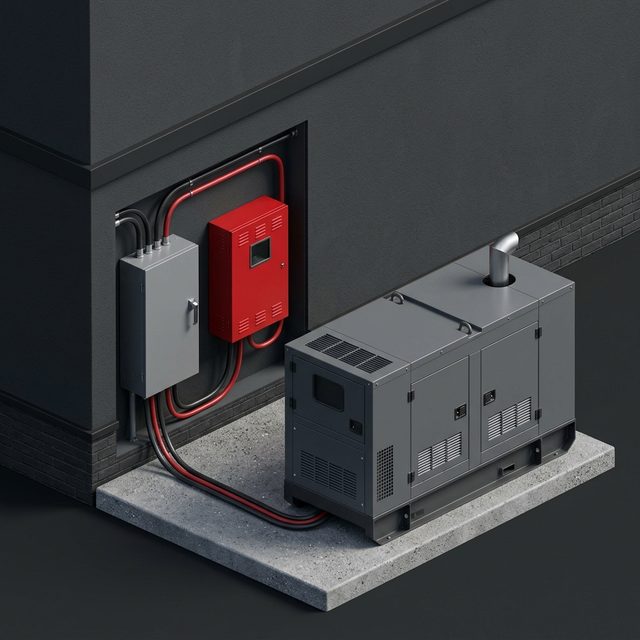
Using the building generator as secondary power — with 4 hours of battery
Secondary power doesn't have to be batteries alone. The code permits an engine-driven generator arranged per NFPA 110 (with a person trained to operate it on site or automatic start) as the secondary supply, provided storage batteries dedicated to the fire alarm system carry the load for at least 4 hours in the interval before the generator picks up or if it fails. Transfer to secondary power has to be automatic, the loss of primary power is annunciated as a trouble, and the fire alarm's branch circuit from the generator distribution is still dedicated and marked.
NFPA 72 reference
Chapter 10 — Fundamentals
10.6.7 Secondary Power Supply (10.6.7.1 storage battery, or automatic-starting engine-driven generator per NFPA 110 with 4-hour storage batteries; 10.6.7.2 capacity 24 h + 5 min / 15 min for EVACS); 10.6.5 dedicated branch circuit
References use NFPA 72 2019/2022 numbering — section numbers can shift between editions, so confirm in the edition your AHJ has adopted.
On the job
A high-rise designer wants to use the life-safety generator as secondary power to shrink the battery cabinets in the voice evacuation system. The AHJ agrees, provided the batteries still provide 4 hours and the panel's branch circuit comes from the life-safety generator distribution with the red-marked, labeled breaker. The battery calc drops from 24 hours to 4 hours plus 15 minutes of alarm.
Quick check
1. When a generator is the secondary power source, the fire alarm still needs batteries for at least:
2. Transfer from primary to secondary power must be:
Listen to this section
AI-narrated, about a minute.
Ask about this section
Get a plain-language explanation of what this rule requires and what to check on the job.
3 free explanations left on this device.