
NFPA 72 code sections · NFPA 72 Overview
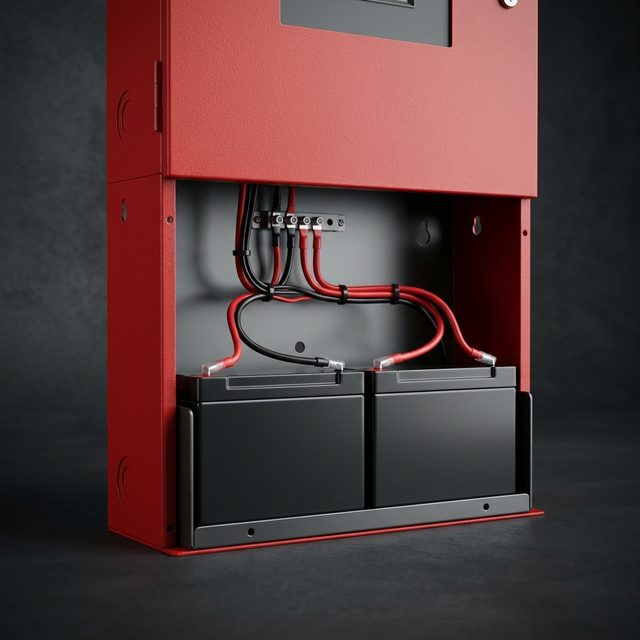
Two power sources — and the 24-hour / 5-minute rule
Every fire alarm system needs a primary power source (normally a dedicated branch circuit) and a secondary source, usually batteries or an engine generator with batteries. The secondary supply must run the system in normal standby for at least 24 hours after primary power fails, and then still operate every notification appliance in alarm for 5 minutes (15 minutes for emergency voice/alarm communication systems). Battery calculations prove this on paper, and they are part of the submittal and the acceptance test.
NFPA 72 reference
Chapter 10 — Fundamentals
10.6 Power Supplies; 10.6.7 Secondary Power Supply; 10.6.7.2.1 capacity (24 h standby + 5 min alarm, 15 min for EVACS)
References use NFPA 72 2019/2022 numbering — section numbers can shift between editions, so confirm in the edition your AHJ has adopted.
On the job
A strip mall owner adds a dozen strobes to an existing panel. The installer bolts them on but never redoes the battery calc. On the annual test the batteries carry 24 hours of standby but drop below the panel's low-voltage cutoff after two minutes of alarm. The fix is a larger battery set — and a corrected calculation in the records.
Quick check
1. After losing primary power, the secondary supply must carry the system in standby for at least:
2. Following the standby period, a standard fire alarm system must sound alarm for:
3. An emergency voice/alarm communication system needs how long in alarm after standby?
Listen to this section
AI-narrated, about a minute.
Ask about this section
Get a plain-language explanation of what this rule requires and what to check on the job.
3 free explanations left on this device.