
NFPA 72 code sections · Devices & Signal Flow: How the Panel Hears and Speaks
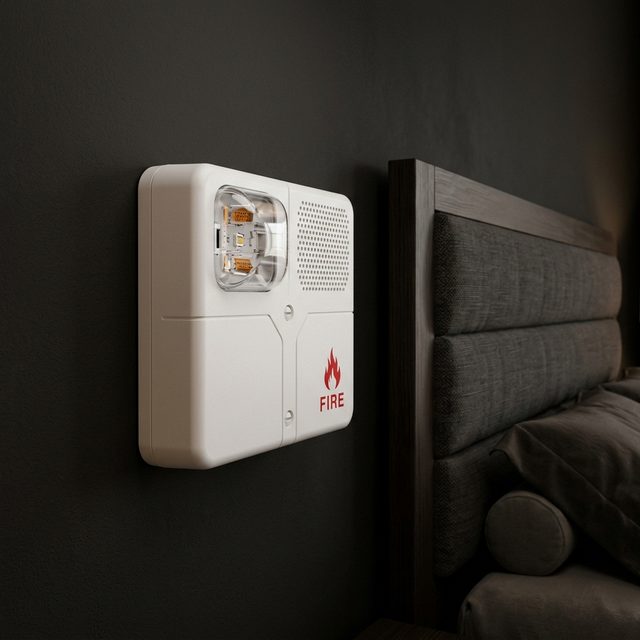
Low-frequency sounder: the alarm that wakes people up
In sleeping rooms served by the fire alarm system, the panel's audible output has to be a low-frequency sounder producing a 520 Hz square-wave tone, still in the Temporal-3 pattern and still at least 75 dBA at the pillow. The panel activates it exactly as it would a horn, but the appliance itself is different — research showed that children, older adults and people with hearing loss often sleep through a conventional 3 kHz horn and wake to 520 Hz. Standard horns are not acceptable in those rooms where the building code invokes this requirement.
NFPA 72 reference
Chapter 18 — Notification Appliances
18.4.5 Sleeping Area Requirements (18.4.5.1 75 dBA at the pillow; 18.4.5.3 520 Hz ± 10% square-wave low-frequency signal); 18.4.2 Temporal-3 pattern
References use NFPA 72 2019/2022 numbering — section numbers can shift between editions, so confirm in the edition your AHJ has adopted.
On the job, step by step
- A smoke detector in a hotel corridor alarms at 3 a.m.
- The panel energizes the notification circuits for that floor.
- In each guest room the low-frequency sounder produces the 520 Hz Temporal-3 tone at 75 dBA at the pillow; guests with mild hearing loss wake where a standard horn would have left them asleep.
- Corridor horn/strobes sound at the same time for people already up and moving.
Quick check
1. The sleeping-area low-frequency signal is centered at:
2. The low-frequency sounder is activated by the panel:
Listen to this section
AI-narrated, about a minute.
Ask about this section
Get a plain-language explanation of what this rule requires and what to check on the job.
3 free explanations left on this device.