
NFPA 72 code sections · Devices & Signal Flow: How the Panel Hears and Speaks
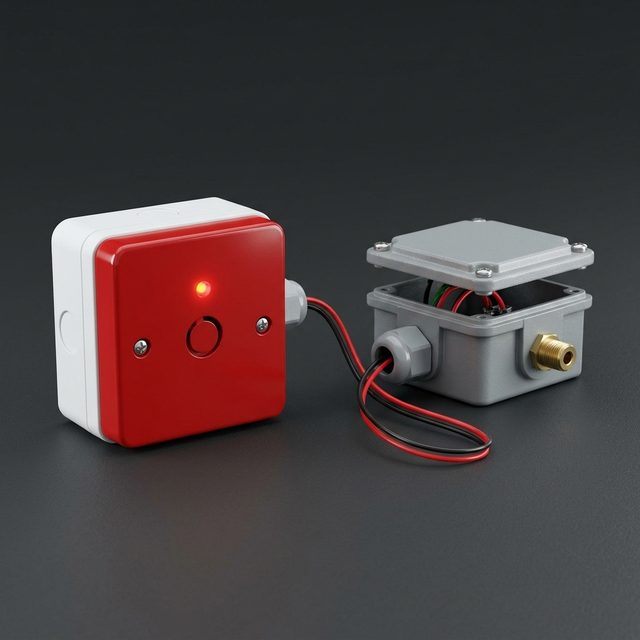
Monitor module: gives a plain switch a voice on the system
A monitor (input) module lets the panel listen to equipment that has no fire alarm electronics of its own — a dry contact. The module watches a contact and reports its state to the panel as whatever signal type it is programmed for: alarm (a waterflow switch, a kitchen-hood suppression pressure switch, a conventional pull station), supervisory (a valve tamper, low air pressure, a generator fault) or trouble (a fire pump 'power lost' contact). The short circuit between the module and the contact is an initiating device circuit, so the code requires it to be monitored for integrity with an end-of-line device — an open there shows as a trouble, not as silence. Typical uses: sprinkler waterflow and tamper, hood and clean-agent discharge switches, fire pump and generator status, beam detector alarm/trouble contacts, elevator status feedback.
NFPA 72 reference
Chapter 12 — Circuits and Pathways / Chapter 17 / Chapter 23
12.6 Monitoring Integrity (the module-to-contact circuit is a supervised initiating device circuit); 17.12 waterflow, 17.13 other extinguishing systems, 17.16 supervisory devices (typical monitored inputs); 23.8.5 signal type programmed per device
References use NFPA 72 2019/2022 numbering — section numbers can shift between editions, so confirm in the edition your AHJ has adopted.
On the job, step by step
- A kitchen-hood wet-chemical system discharges; its pressure switch closes.
- The monitor module beside the hood control head sees the contact close and reports to the panel — programmed as an alarm.
- The panel declares 'KITCHEN HOOD SUPPRESSION — ALARM', starts notification within 10 seconds and transmits to the supervising station.
- The next morning a cook knocks the module's wire loose; the panel shows a trouble for that module, because the module-to-switch circuit is supervised.
Quick check
1. A monitor module's job is to:
2. A valve tamper switch on a monitor module should be programmed to report as a(n):
3. If the wire between a monitor module and its switch breaks, the panel shows:
Listen to this section
AI-narrated, about a minute.
Ask about this section
Get a plain-language explanation of what this rule requires and what to check on the job.
3 free explanations left on this device.