
NFPA 72 code sections · Devices & Signal Flow: How the Panel Hears and Speaks
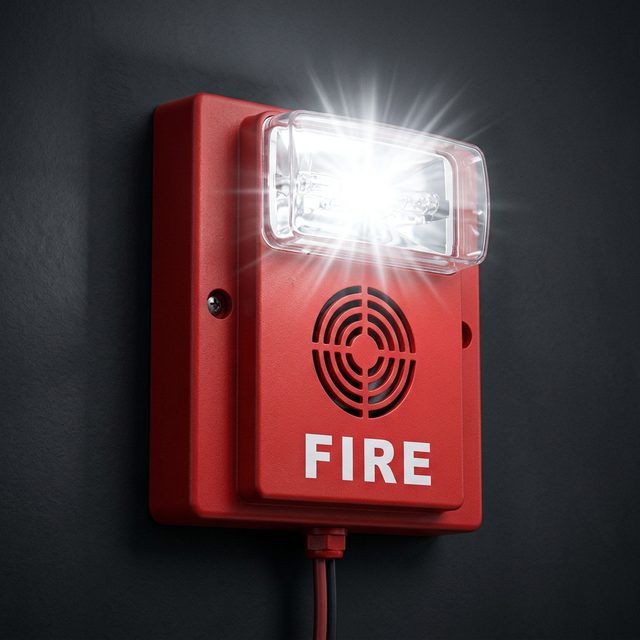
Strobe (visible appliance): the alarm for people who can't hear it
A strobe converts the panel's alarm decision into light for people who are deaf, hard of hearing, wearing hearing protection, or in a noisy space. Like a horn it is an output: it flashes only when the panel energizes its circuit. The code sets the flash rate at 1 to 2 flashes per second, requires strobes within the same room or field of view to flash in synchronization when more than two are visible, and specifies the light output (candela) and spacing by room size, ceiling height and corridor length so the flash reaches everyone. Strobes in sleeping rooms carry much higher candela ratings.
NFPA 72 reference
Chapter 18 — Notification Appliances
18.5 Visible Characteristics — Public Mode (18.5.4 flash rate 1-2 Hz and synchronization; 18.5.5 appliance spacing by room, ceiling and corridor; 18.5.5.7 sleeping areas); 10.11.1 activation within 10 s
References use NFPA 72 2019/2022 numbering — section numbers can shift between editions, so confirm in the edition your AHJ has adopted.
On the job, step by step
- The panel declares a general alarm.
- Within 10 seconds it energizes the strobe circuits; the panel or its synchronization module keeps every strobe in an open office flashing together.
- A deaf employee at the far end of the floor sees the 75-candela wall strobe flash once per second and starts for the exit.
- When the horns are silenced at the panel, the strobes keep flashing until the system is reset, so late arrivals still see that an alarm is in progress.
Quick check
1. A strobe flashes when:
2. The permitted strobe flash rate is:
3. Strobes must flash in sync when:
Listen to this section
AI-narrated, about a minute.
Ask about this section
Get a plain-language explanation of what this rule requires and what to check on the job.
3 free explanations left on this device.